








What a weird week it’s been in golf.
The PGA Tour announced details of a radical overhaul to the season-ending playoff series – though it’s no longer referred to as a ‘playoff series’ – and it’s been well received by media, players and fans alike.
I’m sure there are corners of the internet that think differently – there are always corners of the internet that think differently, of course – but I can’t recall a single occasion where virtually every media outlet unanimously agreed that a specific change was positive. Especially not one coming from the PGA Tour, an organisation that seemed to specialise in drawing ridicule over the past decade or so.
Maybe that says more about the current playoff system than the one we’ll see in 2028 and beyond, but either way, that sort of widespread agreement and support was odd, to say the least.
LIV Golf 1.0 concluded, and Scott O’Neil, the company’s CEO, was busy telling us how good LIV 2.0 is going to be before admitting that as a man who comes from a family of entrepreneurs, he can understand why companies – vendors, in this instance – might be a little peeved at being stiffed for five-, six, and seven-figure sums owed by an organisation that was handing out over $40 million in prizemoney alone that week.
I may not come from a family of entrepreneurs, or even run my own business, but I’m pretty sure that gaining a reputation for screwing over businesses with whom you signed contracts is not good for future business.
I’m also fairly sure that, considering the $5 billion-plus of investment that the venture burned through without really tickling the interests of the sporting public, a watered-down version, minus some of the league’s stars, is going to fare considerably worse.
But obviously I’m wrong. I must be, or there wouldn’t be an investor willing to pump in $300 million – or loan $300 million, we haven’t fully discovered which. I’ve been wrong before, and I’ll be wrong again, and LIV could very well exist in some form in 2027, maybe even 2028, but if it ever amounts to anything more than a curious sideshow, then I’ll be damned.
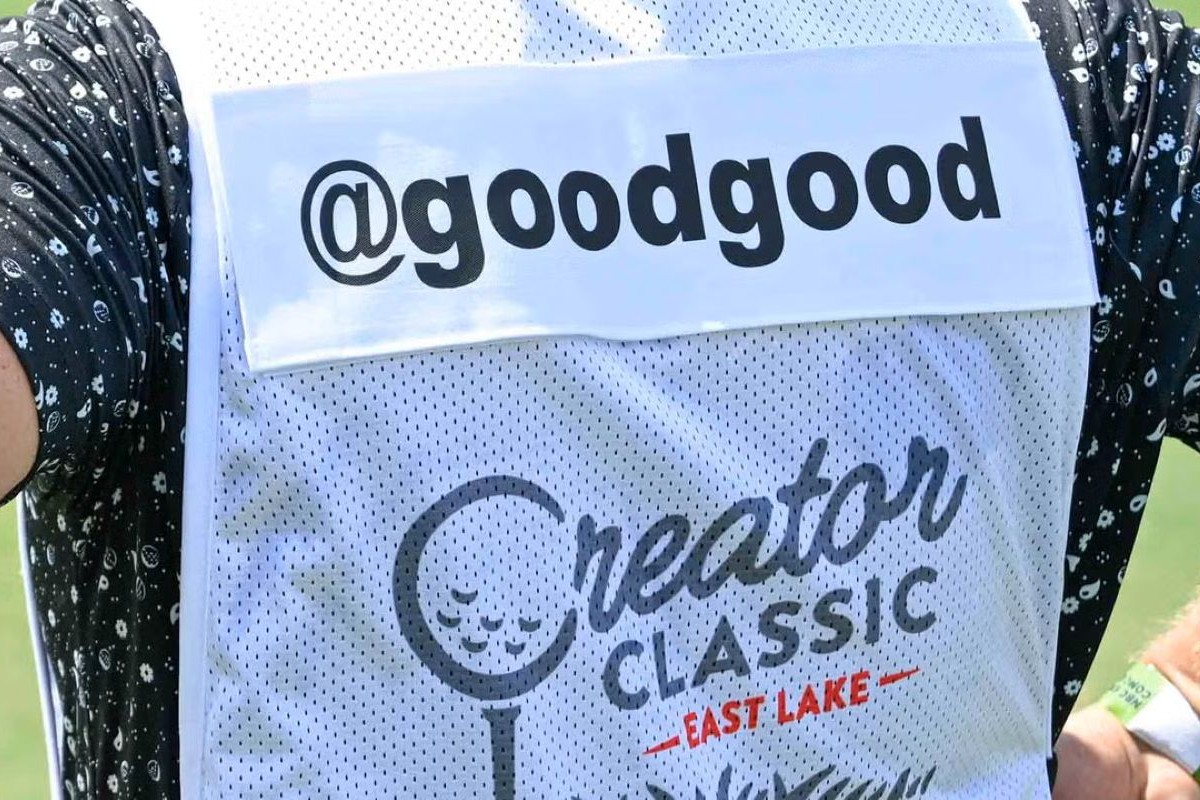
But the oddest golf story of the week was that of Callaway, Good Good, and the advert for the new driver that’s a collaboration between the equipment giant and the YouTube brand.
For the sake of brevity, I’m going to assume you’re well aware of the controversial advert that aired across social media channels and was swiftly withdrawn, but on the off-chance that you’re not – and I’m impressed that you found this piece first – then take a minute to catch up. You’ll find it easily enough.
I’m no fan of cancel culture. There’s not a human being on this planet that hasn’t done or said something stupid or something offensive at some point, and I’m as guilty as anybody else, but I’ve always argued that intent matters more than the act.
If Good Good – and Callaway by extension – intended to portray an act of male-on-female violence and not just include it in their advert, but make it the opening scene, then of course they deserve all the 21st-century flogging they’re getting online and much more besides. I’m sure they didn’t, but if an act is stupid enough, even a lack of intent is not an excuse.
And in this case, I can’t begin to explain how stupid it was.
Not just the concept of the advert, which I’m led to believe was a spoof on the horror movie Obsession, but let’s start there. We’re not talking about The Exorcist or A Nightmare on Elm Street here – horror movies that have become so ingrained in culture that even a poorly executed spoof on them can scarcely be mistaken for anything else. No, we’re talking about a movie that only hit cinemas just over three months ago.
Maybe it’s already become a cult classic among the cohort likely to buy a Good Good Callaway driver, but assuming it hasn’t, then a large portion of the intended market wouldn’t really get the joke to begin with, which is a poor marketing ploy in itself.
But, of course, it was the fact that the advert starts with a man running and aggressively shouldering a woman to the ground – with a blindside hit, no less – and then menacingly asserting that she should “not touch his new driver” that was the main source of controversy.
I believe that it was supposed to be an act of mercy, an intervention to save her from becoming obsessed, as we later see a male colleague falling under the driver’s spell.
But how the production team at Good Good – no small operation, considering they were penned in as sponsors of a PGA Tour Fall Series event which typically requires close to a nine-figure investment – and the production team at Callaway didn’t grasp that it could be problematic is beyond me.
But clearly, either nobody did, or nobody spoke loudly enough to save both companies from the embarrassments that have followed.
Callaway, while no innocent victims, will recover. Good Good may not. At least not fully. I’m sure their YouTube audience won’t desert them entirely, but as evidenced by the collaboration with Callaway, the PGA Tour sponsorship, the clothing brand they’ve created, and the Golf Channel series they’d filmed – and which has subsequently been postponed – they’ve been steadily moving away from being just a bunch of lads who share videos online.
Stupidity is not a crime, but when you’re trying to turn a YouTube channel into a serious commercial business, it can be remarkably expensive.













Leave a comment