
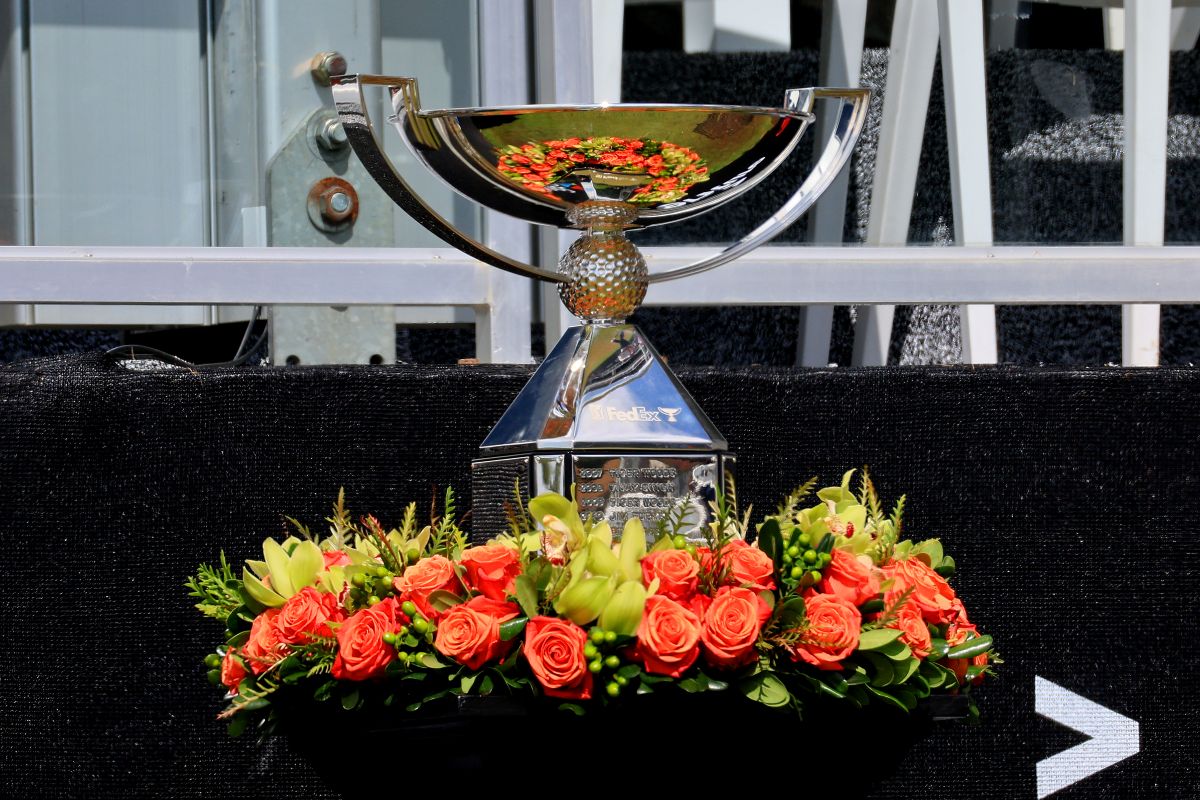









This year will be the 20th staging of the PGA Tour’s FedEx Cup playoff series, and by the time somebody is crowned FedEx Cup champion at East Lake in just under three week’s time, FedEx will have shelled out over $1 billion in prizemoney alone.
Given that the Saudi PIF spent over $5 billion on LIV in five years, $1 billion over 20 loses its grandiosity a touch, but it’s still a staggering amount of money. It’s even more staggering when you consider that, two decades on, it hasn’t really captured the imagination of the average fan.
Sure, there have been some interesting finishes. Tiger Woods winning in 2018, for his first official PGA Tour win (insert ‘he only beat 29 players’ gripe here) in over five years was one, Rory McIlroy outgunning Brooks Koepka when Koepka was world number one and had won four majors in the previous 27 months was another, but they’ve yet to find a system and a format that really works.
Take 2007, for example. Despite having marquee names like Phil Mickelson winning the Deutsche Bank and then Tiger Woods winning both the BMW and Tour Championships and being crowned the inaugural winner of the FedEx Cup, Woods hadn’t bothered to play in The Barclays – the first of the four playoff events – so the points got juiced for 2008 in an attempt to heavily punish anybody thinking of skipping one of the four.
But then Vijay Singh won the first two playoff events the next year and had the FedEx Cup title sewn up before a ball was struck at East Lake. So the script was torn up again.
2019’s overhaul was the most radical, and in this writer’s opinion, the most ludicrous. Along with reducing the playoff series to three events, it brought in the ‘net championship’ era, where the FedEx Cup leader began the Tour Championship at 10-under, the number-two-ranked player began at -8, etc.
It’s hard to view this change as anything other than a direct result of Tiger winning the Tour Championship the year prior and dominating all the headlines while Justin Rose was crowned FedEx Cup champion and reduced to a mere footnote.
Such a thing couldn’t be let happen, so instead, it became – and still remains, though thankfully without the starting strokes – a ‘winner takes all’ scenario in the final event.
The problem now is that the 30th-ranked player coming into the final event, perhaps a player with just a couple of top-10 finishes in the previous eight months, could have one good week and the history books will suggest that they were the best player on tour.
Actually, that’s a scenario I’d love to see play out, just for the absurdity of it all.
Were it not for the storyline and the general positive attitude towards him, Tommy Fleetwood being crowned winner last year would’ve been almost as absurd. OK, he’d been a regular feature on the first page of leaderboards all season, but he got his first PGA Tour win ever in the Tour Championship when Scottie Scheffler had won five times that year alone and claimed two further majors.
But in a way, that’s how playoffs should work. And in any other major American sport, that’s how playoffs do work; you have to produce the goods in the post-season.
That’s why we’ve been crying out for the season finale to be contested over matchplay, and that’s why, finally, it appears as though the powers that be have listened and it’s that format that’ll be tested when the new-look PGA Tour arrives in 2028.
A scenario where an outsider goes on a run, cutting a path through the likes of Wyndham Clark, Xander Schauffele, Rory McIlroy and then beats Scottie Scheffler in the final is a lot easier to swallow than him finishing top of a 30-man field and being hailed king.
At least then, after 20 years and more than $1 billion spent trying to make the FedEx Cup mean something to the fans, it actually might.













Leave a comment