
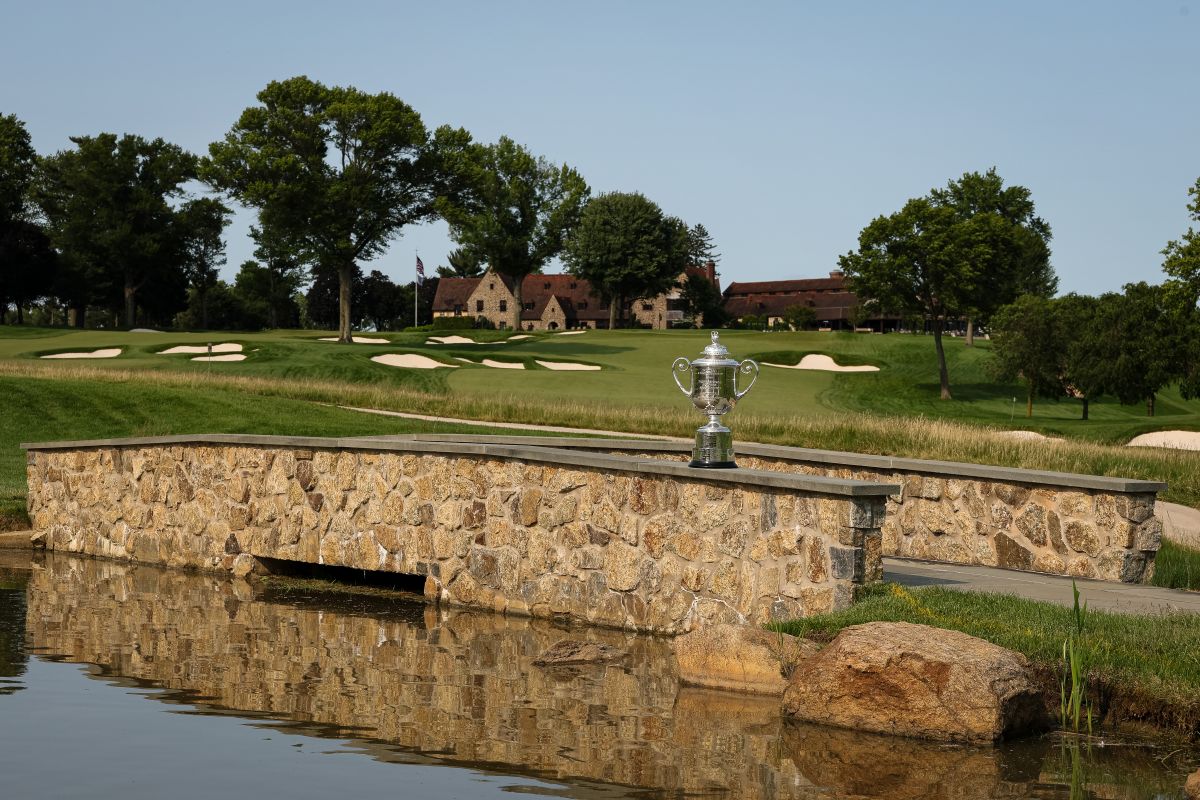




Ahead of the second men’s major of the year, we take a look at six of the major talking points at Aronimink.
Can Rory follow up on his Augusta success?
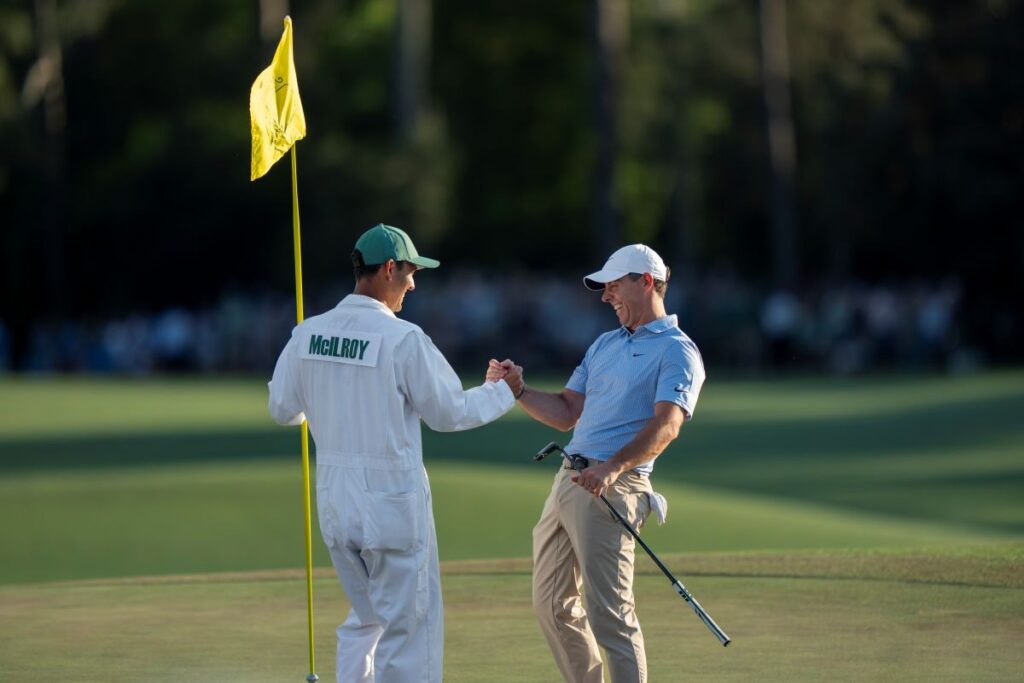
Finally slipping on a green jacket in 2025 after more than a decade of heartbreak was widely tipped to be the floodgate-opener for Rory McIlroy at major championships, particularly with one of his favoured stomping grounds in Quail Hollow next on the agenda, so the rather abject, tetchy and largely uninspired figure that appeared in North Carolina for the PGA Championship took the world by surprise.
It wasn’t much different at Oakmont a month later – a final-round 67 glossed over his previous three rounds – and it wasn’t until Royal Portrush in July that something close to the Rory we expected to see reemerged. But it was too little, too late.
In a way, it was understandable though. The emotional rollercoaster of that final round at Augusta National took a heavier toll than we’d expected, and it wasn’t until he experienced those home roars – both in Portrush and at The K Club in September – that the juices started flowing again.
He’s now realised that, though the 2025 Masters will always be a career-defining moment, his career doesn’t necessarily have to be defined by it, and if he wasn’t aware of that prior to his Masters defence, he’s very much aware of it now.
More PGA and DP World Tour wins will come, but it’s the four majors, the Olympics and the Ryder Cup that will shape the back nine of his career.
Having tied Nick Faldo as Europe’s most successful major player, the next step is to take sole possession of the accolade, and the PGA Championship at Aronimink offers the first shot.
That’s no guarantee that he’ll bring his ‘A’ game, but his title defence at Augusta National is proof that he doesn’t necessarily have to. He just has to be good enough to put himself in the mix on Sunday afternoon and then having the major monkey off his back pays dividends and his name on the leaderboard strikes fear into his opponents rather than fear into himself as it had begun to do.
With Scheffler and McIlroy winning four of the last five major titles, who can break the dominance of the ‘big two’?
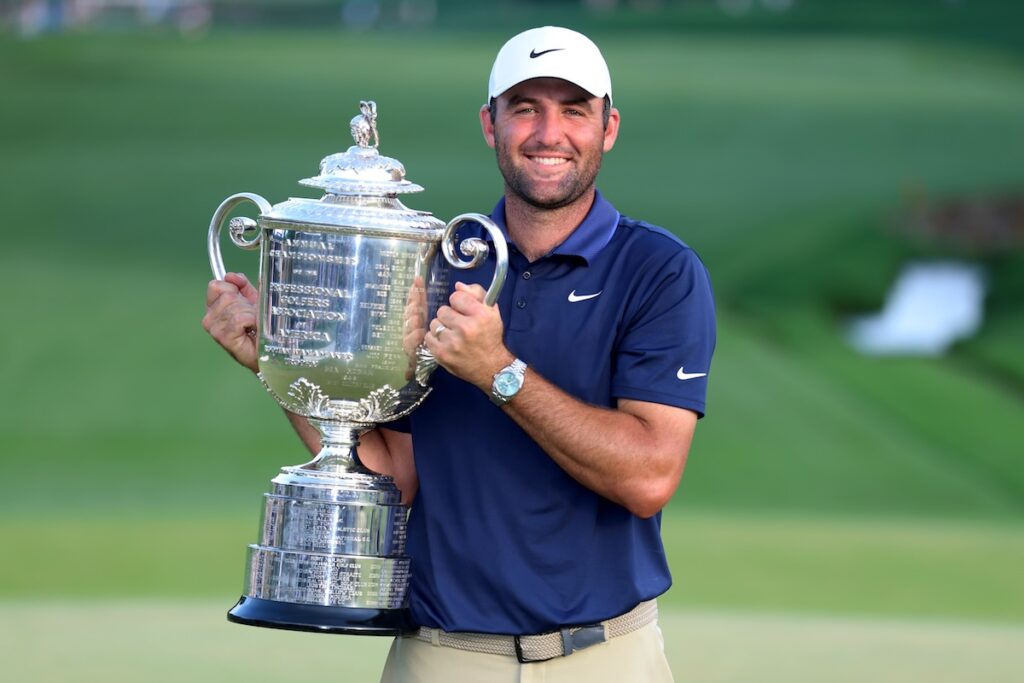
Since the end of the global pandemic in 2020, 16 different players have been crowned major champions, with 11 of these being first-time winners. On the surface, that suggests that the sharp end of men’s professional golf is as competitive as it’s ever been, but four of the last five major titles have gone to two players – players who happen to be numbers one and two in the world rankings.
Only twice this century has the previous five major championships gone to three players or less, and on both occasions, it was Tiger Woods who did the heavy lifting.
Though McIlroy and Scheffler have both finished runner-up to the other in a major championship – McIlroy to Scheffler at the 2022 Masters and the reverse at Augusta National this year – a proper head-to-head major championship battle has yet to materialise.
But neither player has produced their absolute best this season, and Scheffler in particular has shown himself to be human.
Matt Fitzpatrick, who won the Valspar Championship and RBC Heritage after finishing runner-up at TPC Sawgrass, then won the Zurich Classic alongside his brother Alex – arguably playing under more pressure than he’d ever experienced given what was at stake for his younger sibling – has to feel that the time is right for him to claim a second major title.
Cameron Young, who pipped Fitzpatrick at The Players Championship, dominated the field to win the Cadillac Championship at Doral, and played in the final group with McIlroy at Augusta, left The Masters feeling he’d played well enough to win, as did Justin Rose, while Collin Morikawa looked back to his best before suffering a back injury and still managed to finish inside the top 10 at Augusta National without adequate practice in the run in.
Add to this list a rejuvenated Xander Schauffele, three-time PGA Championship winner Brooks Koepka showing flashes of his old self, and Ludvig Åberg who continues to look a major champion in waiting, and the supporting cast to Scheffler and McIlroy stacks up strong.
Then, of course, there’s Jon Rahm and Bryson DeChambeau.
How will the LIV players cope with growing uncertainty over the league’s future?
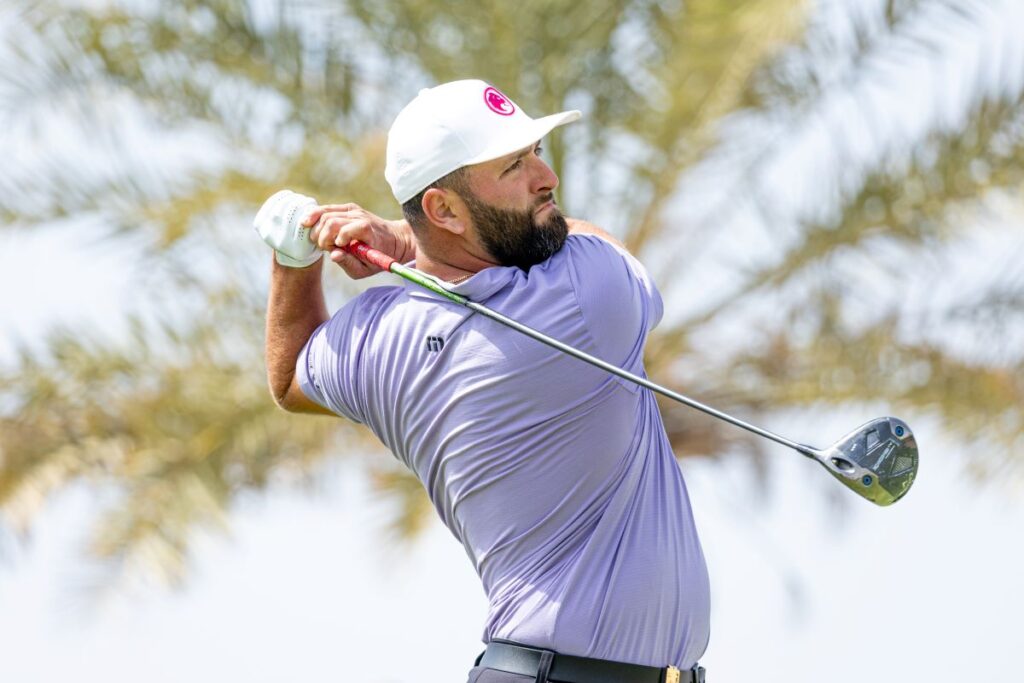
Tyrrell Hatton’s strong final-round showing saved some of LIV Golf’s blushes at the Masters, but it was an otherwise disastrous week for the group. With Rahm and DeChambeau accounting for each of the three previous LIV tournaments, and the former winning again since and yet to finish outside of the top five on the circuit all year, they were not only hoping to go close at Augusta National, but they were also expecting it.
For whatever reason, it didn’t materialise, and suggestions that soft golf course setups and a lower overall standard of competition on LIV were to blame were easy to make. And maybe accurately so.
Hatton, with his T3 finish, was the only LIV golfer inside the top 30, while Koepka and Patrick Reed, both of whom opted to leave LIV before the season began, performed well and each finished tied for 12th after playing multiple tournaments on the PGA and DP World Tours respectively. Dustin Johnson finished T33, Rahm T38, Sergio Garcia 52nd, and Charl Schwartzel 54th, with Bryson, Bubba Watson, Tom McKibbin and Cameron Smith all missing the cut.
Since then, LIV has been headlining news for mostly the wrong reasons with the news that the Saudi Public Investment Fund would not be bankrolling the venture after 2026 and suggestions that this would effectively be the kiss of death for the league.
Rahm, while refusing to state the specifics, suggested that his Masters preparation had been inadequate but that he knew exactly why and would take steps to rectify it, and he’s since buried the hatchet in his Mexican standoff with the DP World Tour, removing at least one worry as others continue to hover in the background.
Bryson, out of contract with LIV at the end of the year anyway, was reportedly holding meetings at Augusta National to discuss his options next year and then withdrew from LIV Mexico the following week with a wrist injury. He’s since been bullish about LIV’s prospects, while also hinting that a career as a full-time YouTuber who plays major championship golf may not be out of the question.
And this could work both ways. Will they be freed up with the belief that their LIV Golf adventures are possibly coming to an end, or still racked with uncertainty? Only time will tell.
Power or precision? What are the keys to unlocking Aronimink?
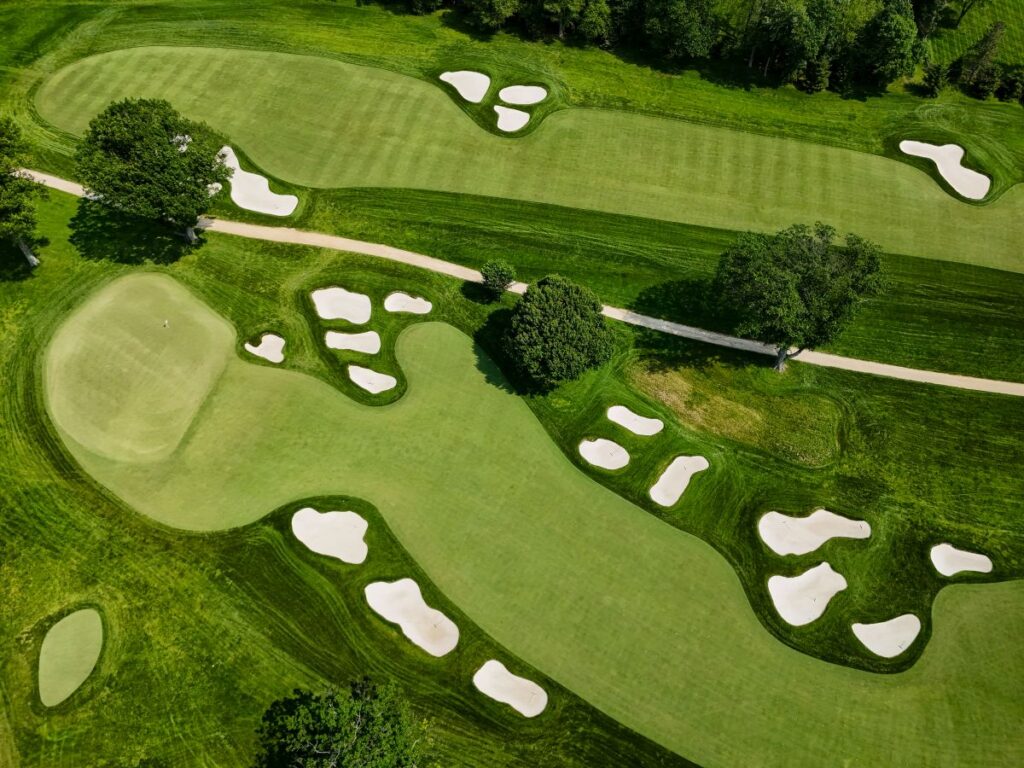
Recent editions of the PGA Championship have followed a familiar blueprint – the course is long, the rough is penal, and if you’re not able to summon up drives carrying well over 300 yards, you’d better be razor sharp with every other facet of the game.
Aronimink, on the outskirts of Philadelphia, promises to buck the trend a little.
At 7,313 yards, Aronimink is over 200 yards shorter than Augusta National, and almost 150 yards shorter than Shinnecock Hills which plays host to next month’s U.S. Open and will also play as a par-70.
Designed by Donald Ross in the 1920s, the legendary Scot returned to the venue in 1948 and declared that though he’d expected Aronimink to be his masterpiece, he’d underestimated its quality.
A restoration project under the guidance of Gil Hanse was completed in 2018, meaning that the version we see today is the closest resemblance to Ross’ original design, and there are over 170 bunkers to contend with, making it visually menacing even though water hazards are sparse and only come into real effect on two holes.
Hanse didn’t have to make any alterations to the greens, as they remained untouched in the near 100-year history, and it’s their severe undulations that are the biggest challenge.
Power is seldom a disadvantage, but particularly if the weather permits and the golf course is allowed to play as firm as possible for a May date, the angle of approach to certain pin locations and the ability to control spin by playing from short grass will be considerable. In those conditions, the premium on accuracy is increased.
But when it hosted the PGA Tour’s BMW Championship in August 2018 – an event won by Keegan Bradley at 20-under – the course was soft and the strategy simple; bash driver, wedge it close, and hope your putter gets hot.
The rough will be much more severe for the PGA Championship, and with midweek forecast, the big hitters should gain an advantage.
How to rate the other Irish contenders’ chances?
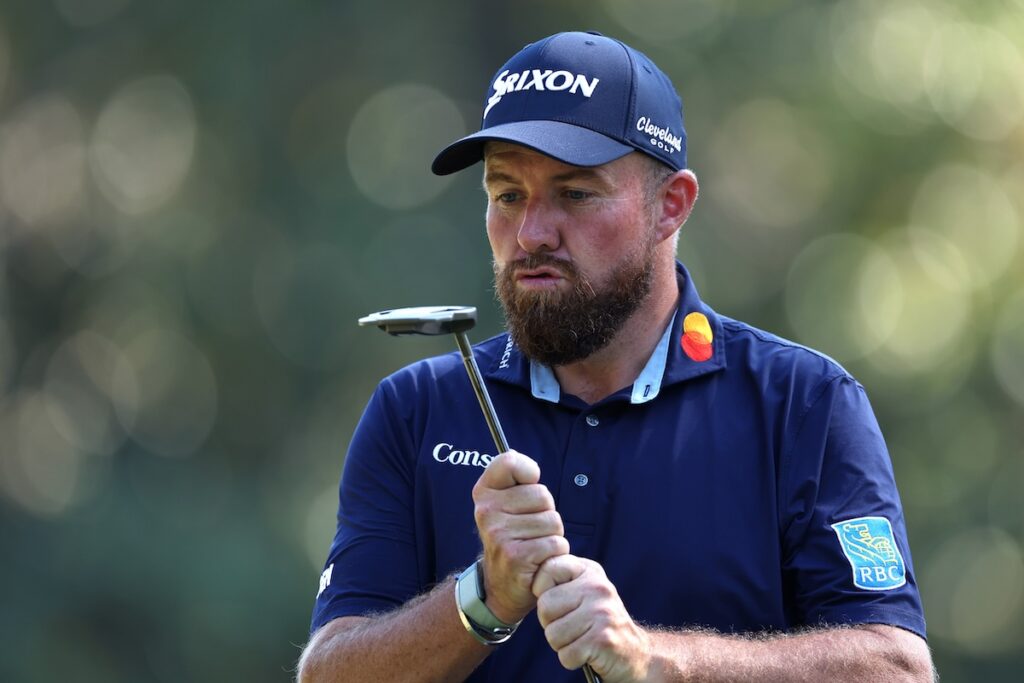
Alongside Rory McIlroy, Shane Lowry and 2008 PGA Championship winner Pádraig Harrington were already guaranteed their starting places, but Tom McKibbin had to wait until late to secure an invitation as one of the top 100 players in the OWGR. In fact, he was ranked exactly 100th when the invitations were finalised, so he got in with nothing to spare.
While he has an Open Championship victory to his name and took a four-stroke lead into the final round of the 2016 U.S. Open, it’s been the PGA Championship where Lowry has shown his most consistent major form over the past decade.
Tied for eighth at Bethpage Black in 2019, tied for fourth at Kiawah Island in 2021, and tied for sixth at Valhalla two years ago, his only missed cut in the last nine attempts came last year at Quail Hollow – a golf course that he doesn’t favour anyway, and less than a week after three-putting the 18th green at Philadelphia Cricket Club with a chance to win.
Particularly if we get dry conditions, the accuracy, distance and spin control required will be right up Lowry’s alley, but even if we don’t, his iron play should put him on many people’s betting shortlists.
The big question surrounding him is his ability to close out tournaments. At both the Dubai Invitational and the Cognizant Classic this year, he looked to have victory in his grasp only to watch it slip away, and from the thick of contention at Augusta National, he carded a final-round of 80 and tumbled down the leaderboard.
When his putter gets hot, he’s a force to be reckoned with as two major championship rounds of 63 proves, but when he gets hot under the collar, he tends to struggle. If he can keep the temperature up in his bag and stop it spreading up his hands, he could go close.
Harrington finished alongside Lowry in a tie for fourth at Kiawah, but it’s been grim reading otherwise in recent PGA Championships. He’s missed the cut in nine of the last 12 and has only had one other top-10 finish since winning in 2008.
He’s still capable of grinding out a top-20 finish if he makes it through to the weekend, but his best chance of staging a late major championship swan song will likely come at the Open Championship.
McKibbin made his PGA Championship debut last year and was within touching distance of the top 10 before fading over the weekend and finishing T50.
An otherwise underwhelming season showed signs of springing into life when he briefly hit the front at LIV Mexico and eventually finished tied for fifth – his best result of the year. Playing in his first Masters will have given him additional experience, even if it resulted in a missed cut, but his approach play has been cause for concern this season.
He’s lost strokes to the field in seven of his nine tournament starts in 2026, which is a worrying trend for a player recently regarded as one of the best up-and-coming iron players in the game.
It’s hard to see him winning, and he has yet to finisher higher than T41 in a major, so if he can notch a first top-25 finish then it’ll be classed as a successful week.
The perennial Spieth question… Can he finally complete the Career Grand Slam?
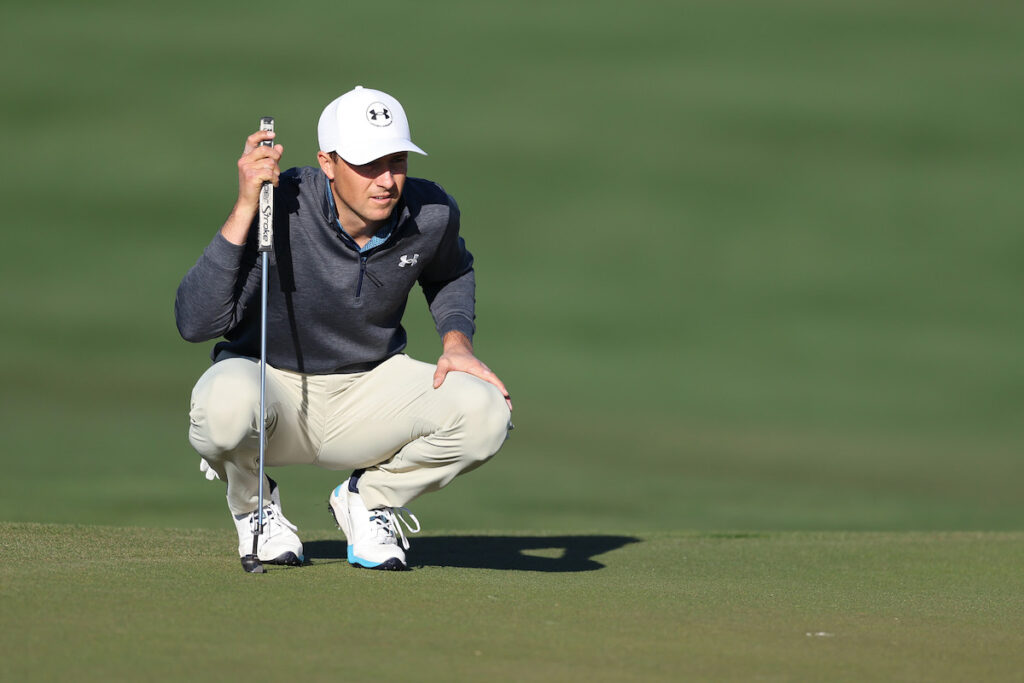
Like we had with Rory at the Masters before he finally slayed his White Whale, we have Jordan Spieth at the PGA Championship. When he won the Open Championship at Royal Birkdale in 2017, it seemed a question of ‘when’, not ‘if’ Jordan Spieth would join the exclusive club of players to have won all four majors, and whether it was McIlroy or he who won the race was an interesting subplot.
In truth, he hasn’t really come close. In 2019, he finished tied for third behind Brooks Koepka, but he was nine back entering the final round and six behind at the death.
But there’s a strong case to be made that Aronimink presents his best chance and that he’s playing a better brand of golf than he has going into any PGA Championship since the move to May seven years ago.
The only area he falls below tour average on is driving accuracy – he’s well above on all other metrics – and when he tends to miss, he tends to miss big. It wouldn’t be as much fun watching him play if he started hitting fairways with the regularity of Scottie Scheffler, for example, but he’s one of the few players capable of being suitably wild off the tee and still managing to shoot rounds in the 60s.
The obvious answer is “no,” this won’t be the year he completes the Career Grand Slam, but we’re in for a wild ride if he’s in the hunt.








Leave a comment