









How do you know who the best golfers in the world really are?
There are, of course, the scores they shoot in tournament competition. But there’s also the surrounding context: where they shot them and against what level of competition. It’s more complex than you might think. Between the various tours, formats and tournaments played across the globe, all those matrices of scores can make for a jumbled mess of digits across different websites and platforms.
Increasingly, a solution for golf fans is the website DataGolf. Official world rankings serve their own purpose but have their limitations, too, failing to account for the skill displayed in an eight-shot versus one-shot victory, or the complexity of awarding points to new tours. Most of the issues contextualising the men’s game have been solved by DataGolf for years, but the women’s game has lagged behind.
But now it’s catching up.
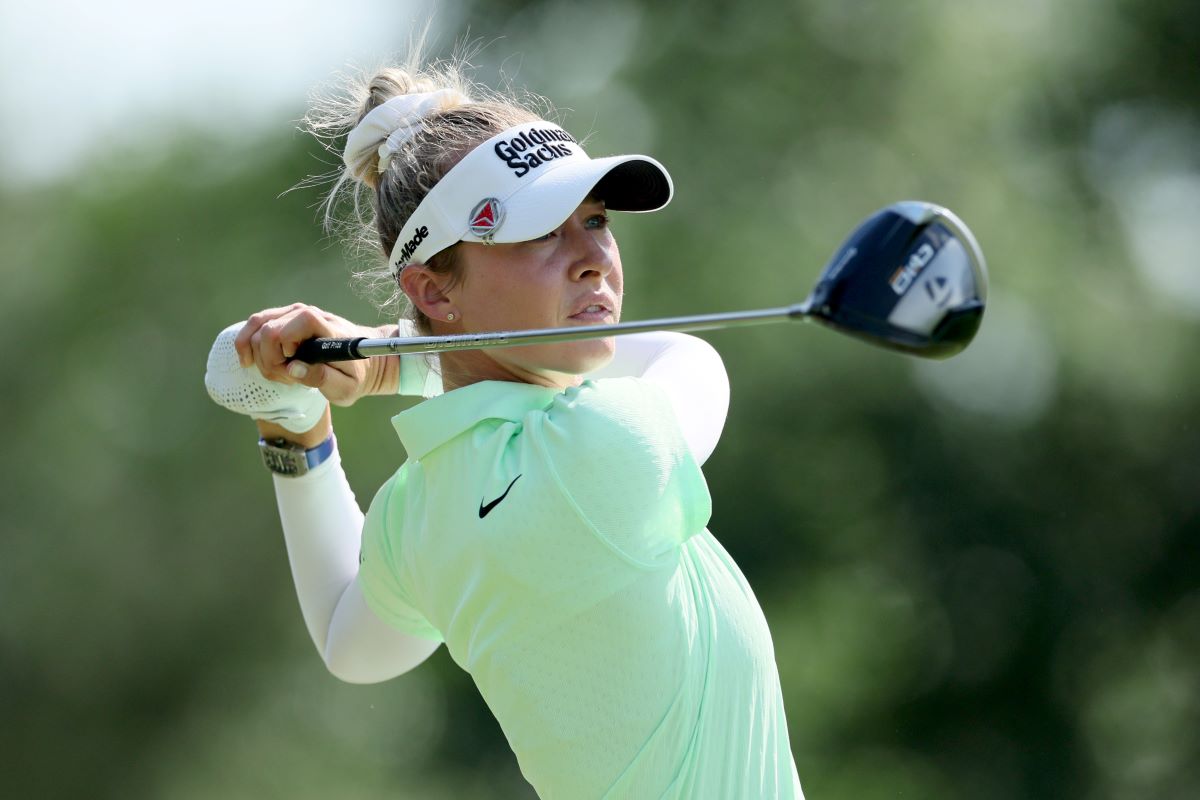
Starting this week, DataGolf now has a women’s ranking to rival its men’s ranking — a new, clearer way to explain whether Nelly Korda really is playing better golf than Jeeno Thitikul.
Essentially, DataGolf rankings assess how a professional golfer’s results in the tournaments they play stack up against others in that field, as well as every other field. If you play well anywhere, it reflects positively in terms of strokes gained against an elite-golf average. If you play well against a field of elite golfers, it demonstrates a higher skill level. Similarly, playing poorly anywhere is a negative, and playing poorly against a low-quality field is worst of all.
So, who is at the top of the initial DataGolf women’s ranking?
It’s Korda, then Thitikul, then Hyo Joo Kim — the same top three, though in a different order, as the Rolex world rankings. But the real value of the rankings appears further down the list. A significant portion of elite women’s golf takes place in Asia, where players may rarely compete in the same fields as Korda. Many play primarily in Japan or Korea, and Korda seldom travels there. That creates challenges not just for tours, but for fans trying to follow the sport and understand each week’s competition.
DataGolf’s ninth-ranked player — just ahead of last week’s LPGA winner Hannah Green — is 23-year-old Shuri Sakuma, who has played only five LPGA events in her career, none of them in America. Four have been in her home country of Japan, where she has dominated the JLPGA, winning four times in the last 12 months. As a result, she appears in this week’s field at the Chevron Championship. She is not in the same class as Korda, but perhaps closer than previously assumed.
Another feature of DataGolf is how its skill index helps explain the dominance of top players relative to their peers. While it is difficult to directly compare players across men’s and women’s golf, the index offers insight. Scottie Scheffler’s rating is significantly ahead of second place in the men’s game, while Korda’s lead over Thitikul is narrower.
That may not seem especially meaningful now, but it would have been fascinating to compare during periods when both players were dominant. It’s even possible that Korda’s peak dominance in the women’s game exceeded Scheffler’s in the men’s game.
DataGolf plans to backdate these rankings to the year 2000, with future analysis expected on historic runs by players such as Annika Sörenstam and Lorena Ochoa.
Stay tuned.
This article originated on Golf.com













Leave a comment