
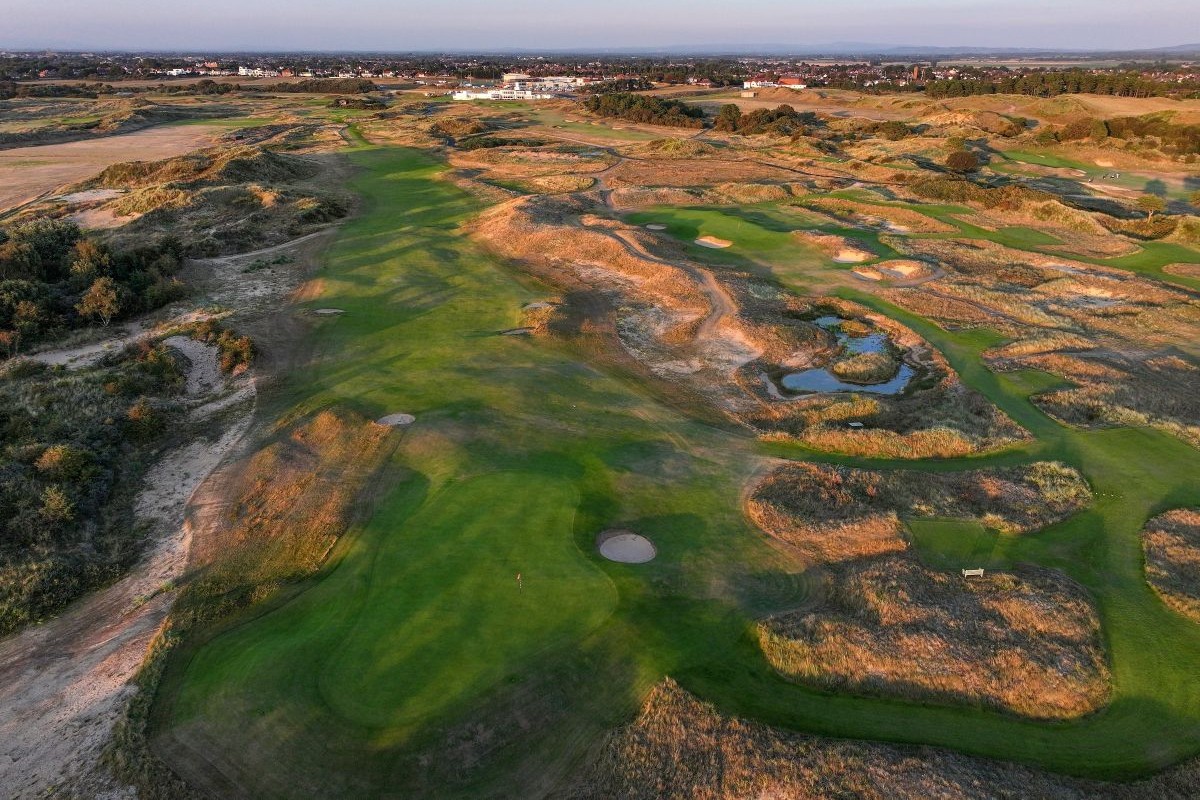

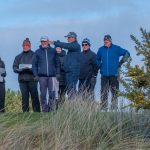
Royal Birkdale sets the stage for the 154th Open Championship and though it lacks the history of a St Andrews, the dramatic beauty of a Royal Portrush, or even the sheer treachery of a Carnoustie, pound for pound, it may be the best course on the Open rota, and as a Championship venue it never fails to deliver.
Eighty-two Open Championships had been contested before it first visited Royal Birkdale in 1954.
Founded 137 years ago in 1889, Birkdale Golf Club, as it was then known, began life as a 9-hole course on what is now the Southport outskirts. By 1894, the club was on the lookout for a new location and three years later moved to its current location in Birkdale Hills and its towering dunes.
The new 18-hole course was originally laid out by George Lowe, the professional at nearby Royal Lytham & St. Annes – though it too didn’t have ‘Royal’ status back then – and it wasn’t until the 1930s that a remodel was carried out with the goal of bringing the course up to championship standard.
That was carried out by Frederick George Hawtree and John Henry Taylor, the former a well-established golf architect and the first of three generations of Hawtrees to leave their fingerprints on the layout, and the latter a top professional who’d won five Open Championships over an 18-year period ending in 1918.
Along with this strategic remodel, a new clubhouse was created, and the art deco structure, designed to resemble an ocean liner sailing through the dunes, remains to this day.
With its new and improved layout, Birkdale Golf Club was nominated to host the Open Championship in 1940, but the outbreak of World War II forced the cancellation of the Championship and instead, the 1946 Amateur Championship – more on that later – was the first big championship it hosted.
The 1948 Curtis Cup followed, and along with the Walker Cup in 1951, King George VI bestowed Royal status in recognition of the quality of the golf course and its ability to test the best players in the world.
Then, 14 years after it was originally planned, the Open Championship finally came to Royal Birkdale.
Australian Peter Thompson would go on to win five Open Championships in total, but the first and last (1965) of these would come at Royal Birkdale, with Arnold Palmer winning his first Open title at the club’s second hosting of the Championship in 1961.
In total, there have been 10 Open Championships held at the venue – this will be the 11th – along with six Women’s British Opens, four Amateur Championships, two Ryder Cups, one Walker Cup and one Curtis Cup.
A history of inclusivity
Though it was only first held in 1976, Royal Birkdale was the first of the Open rota and ‘Royal’ labelled course to host the Women’s British Open – now the Women’s Open – when it opened its doors to the game’s top women in 1982.
But that should come as little surprise because, unlike many other golf clubs in the era, female golfers and members had always been welcome at Birkdale. Shortly after the club was founded, the members unanimously voted to allow ladies to use the links, the first lady members were elected in 1890, and among the first tournaments the club hosted after moving to its new site was the 1909 Ladies’ British Open Match-Play Championship.
Only Woburn Golf Club with nine has hosted the Women’s British Open on more occasions than Royal Birkdale’s six, and though it has always been considered a major by the Ladies European Tour, the first three of Birkdale’s six came at a time when the Championship was not recognised as a major by the LPGA.
Irish success
While Pádraig Harrington’s successful 2008 defence of the Claret Jug he first claimed at Carnoustie the year prior remains the most recognisable Irish triumph at Royal Birkdale, he was far from he first Irishman to hoist a trophy in front of the Birkdale clubhouse.
That first post-WWIII Amateur Championship was won by Jimmy Bruen who defeated Robert Sweeney Jnr 4&3 in the final, becoming the first Irishman to get his hands on a trophy that was first contested over 60 years prior.
The club received widespread praise, not just for the Championship it held, but for its healthy supply of Scotch Whisky in the clubhouse as post-war rations meant it was typically in short supply.
In 1965, Christy O’Connor Snr finished joint runner-up to Peter Thompson, and that remained the highest Irish finish in an Open Championship between Fred Daly’s victory in 1947 and Harrington’s win at Carnoustie in 2007, though Darren Clarke’s T2 finish in 1997 matched O’Connor’s.
Another Amateur Championship success was clinched at Royal Birkdale in 2005 when Donegal man Brian McElhinney upset English prodigy Oliver Fisher on the final hole in the semi-final, then produced a stunning display to win 5&4 over Scotland’s John Gallagher in the final.
One for the record books
Wind is the last line of defence for any links course, even the best ones, and it was as though the elements were on strike for the third round in 2017.
Since Johnny Miller blitzed Oakmont, considered by many to be the toughest golf course in the United States, and took 63 blows in the final round of the 1973 U.S. Open, that number seemed impenetrable in major championship golf.
28 golfers combined to match it on 30 occasions in the 44 years that followed, but nothing lasts forever, and the odds were high that when a ’62’ was finally recorded, it would be on a par-70 layout.
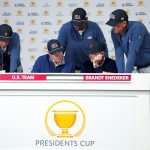
And so it proved when South African Branden Grace finally broke through the glass ceiling.
Eight birdies and 10 pars amounted to 62 strokes, but even with the course at its most defenceless, Dustin Johnson was the only other man to break 65 and 19 of the 69 players who made the cut shot 71 or higher.




Leave a comment