








Long before the Korda sisters, Jessica and Nelly, and the Maguire sisters, Lisa and Leona, there were the Curtis sisters, Harriot and Margaret. Between them, they captured four U.S. Women’s Amateur titles. But their legacy in the game is more closely linked to the biennial competition that bears their name.
The Curtis Cup returns Friday for its 44th edition, pitting elite female amateurs from the United States against counterparts from Great Britain and Ireland in three days of foursomes, four-ball and singles matches. Though the Americans own a lopsided 31-9-3 advantage in the biennial series, the visitors arrive as defending champions after their victory two years ago at Sunningdale.
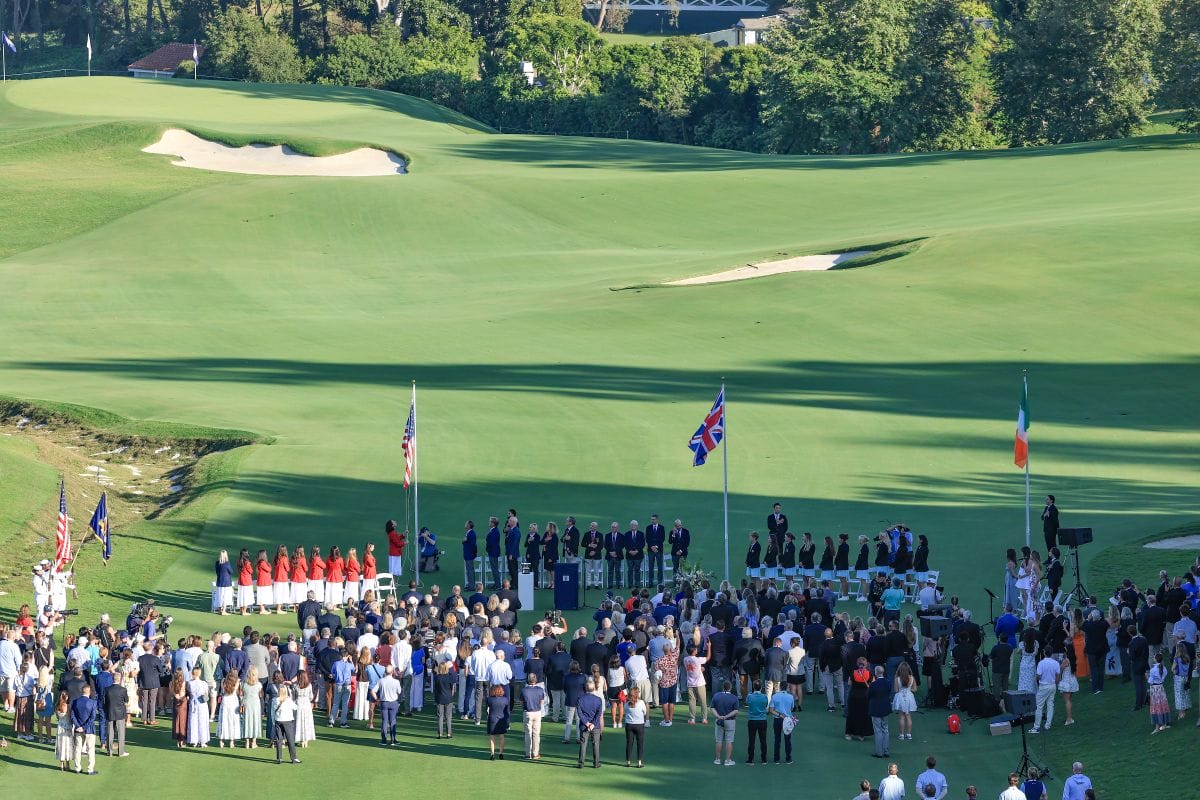
Sunningdale is a fitting point of reference. Over the decades, the Curtis Cup has travelled to many of the game’s most celebrated venues, and this year’s host is no exception. The team matches will be contested at Bel-Air Country Club, the Los Angeles gem etched into the hills just a few miles from Riviera, site of last week’s U.S. Women’s Open.
Like Riviera, Bel-Air was designed by George C. Thomas (with assistance from Billy Bell). But it has a personality all its own. Before Friday’s opening tee shots, here are 8 things to know about the course and the club.
One of the Big Three
“Triumvirate” is a fancy word for “prominent trio,” and it gets used a lot in reference to the three most famous courses in L.A.: Riviera, Los Angeles Country Club and Bel-Air. Thomas’ triumvirate! He designed them all in the 1920s, and though Riviera and LACC rank higher on Top 100 lists, the architect himself was most proud of Bel-Air, according to Thomas biographer Geoff Shackelford, in part because of the challenges of the site.
Bridges, tunnels . . . and an elevator
Where Riviera lies along an old river bed, and LACC sprawls over expansive, rolling acreage, Bel-Air spills through four canyons whose ravines and washes posed a routing puzzle. The solution takes golfers on a memorable journey. Over 18 holes, players pass through four tunnels and ride an elevator from the 9th green up into the clubhouse. From there, it’s a short walk to the 10th hole, a long par-3 that plays over a ravine, its tee linked to the green by a 350-foot suspension bridge.
The tunnels of Bel-Air Country Club. The brilliance and audaciousness of George Thomas in routing a course that required three (and eventually four) tunnels, an elevator and a suspension bridge in 1926 is astounding. As bold and creative a routing as any golden age design. pic.twitter.com/T9Vpj8QsEB
— LinksGems (@LinksGems) January 23, 2019
The name rings a ‘Bell’
Billy Bell played a role in the design. But another Bell made the project happen. Alphonzo Bell (no relation to Billy) was an oil and real-estate tycoon who developed the land where the course now sits. Though Bel-Air is French for “beautiful air,” it’s also a spin on the Bell surname.
Nips and tucks
Like a lot of big-name Angelenos, Bel-Air has had plenty of work. Aside from George Thomas and Billy Bell, at least seven architects have altered the course to varying degrees, including Dick Wilson, whose 1962 renovation so upset Thomas’ daughter, a Bel-Air member, that she boycotted the club. Over the decades, other architects — George Fazio, Tom Fazio, Jack Nicklaus and Robert Trent Jones Jr. among them — also carried out tweaks. But the most recent overhaul was conducted by Tom Doak, whose 2018 restoration erased artificial water hazards, reduced total bunkers and undid other changes made throughout the decades, all with the aim of reviving Thomas’ original design.
Comfortable on camera
Doak’s restoration was aided by ample archival material, photographs included. One of those pictures was an aerial shot of a maintenance worker hand-watering the 9th green, snapped nearly a century ago from the Goodyear Blimp. “It doesn’t get much more L.A. than that,” says Eric Iverson, who was Doak’s lead associate on the job.
Glittery crowd
It also doesn’t get much more L.A. than Bel-Air’s membership. In the Golden Age of Hollywood, Jimmy Stewart, Fred Astaire, Dean Martin and Humphrey Bogart all belonged, just as Jason Bateman, Chris O’Donnell, Luke Wilson and Dennis Quaid are in the ranks today. Actors and studio executives abound. Ditto athletes, including Marcus Allen, Wayne Gretzky and Jarrett Stoll. Then there’s Mae West, who was not a member but who left a mark on Bel-Air anyway. Two prominent fairway mounds on the par-4 12th are nicknamed in honour of the voluptuous star.
Holes worth knowing
Thomas believed in opening his courses with a friendly handshake, and Bel-Air’s 1st — a gettable par-5 plunging into the canyon — fits that mould. But as he did at Riviera and LACC, he stiffens things up with a stout par-4 2nd, which requires a carry off the tee over a penal fairway bunker. Nine shots through two holes is a good score. On the back nine, the 14th is a rare par-5 that troubles even elite players, its narrow tee shot followed by a layup complicated by water and a green that runs away from the approach. The par-4 17th drops downhill to a fairway made elusive by the change in elevation and then to a green with trouble all around. It can be a punishing penultimate hole.
Place has stories
If Riviera is the perfect tournament course and LACC the understated cathedral, Bel-Air is the club with the best gossip. Howard Hughes once landed a plane on the property, in a rush to pick up Katharine Hepburn. Members describe a genuine club culture — people who actually know each other and rib each other. Al Michaels, a member, isn’t known for calling golf — but heckling players from the patios overlooking the 1st and 10th tees is something of a club custom, and he’s happy to oblige.
This article originated on Golf.com











Leave a comment