




We’ll start with the obvious question – is LIV dead?
An obvious question, with a less obvious answer. At the time of writing, no, it’s not. Tournaments remain on the schedule, players and staff remain contracted, and Scott O’Neil, LIV Golf’s CEO, in a memo to staff declared that that the season would procced “exactly as planned, uninterrupted and at full throttle.”
That was before LIV Golf Mexico, shortly after the internet became awash with rumour that the league was about to fold and that the event in Mexico City might not even go ahead.
During the tournament, he was interviewed by Oliver Wilson on TNT Sports and was asked about the rumours that the Saudi Public Investment Fund – the financial backers of the league and whose Governor, Yasir Al Rumayyan, spearheaded the venture and sat as Chairman of the LIV Board – was about to pull its funding despite promises that it would keep pumping in funds until 2032.
“The reality is you’re funded through the season,” O’Neil said in the clip, which was later deleted and reposted without the quote included. “Then you work like crazy as a business to create a business and a business plan to keep us going.”
Reading between the lines, that sounds like confirmation of the rumours.
It does, and then a couple of weeks later, it was officially confirmed that the PIF were pulling out and Al Rumayyan stepping down as LIV Chairman.
So, it is dead then?
Not quite. It just means that, if it’s to continue, they’ll need to get the funding elsewhere. And since the PIF are believed to have injected $5 billion over the five years they’ve been involved, whoever steps into the breech will need to have extremely deep pockets or the product will be watered down significantly.
Nobody will want to take that risk, surely?
Never say never. You know what they say about fools and their money? They’re easily parted. Even so, if the wealthiest sovereign fund in the world decided to cut the cord rather than wait for a return on investment that may never come, it’s hard to picture even the most foolish of investors thinking they can make a return.
After investing $5 billion, why are the PIF pulling out now?
Good question, and one that can be answered in a few ways. The simple one is that they weighed up the pros and cons of continuing and decided that the latter outweighed the former. Even for a fund with over $1.15 trillion’s worth in assets, $5 billion is not pocket change, and the prospect of shelling out considerably more in shaky economic times is a daunting one.
The more complicated answer is that the Israeli-U.S. war with Iran has threatened the economic stability of the oil-rich nations in the Middle East, and even before that began, the Saudis had made it clear that domestic investments as opposed to international ones would be taking precedence in their new five-year strategic plan.
They’ve had to ramp up their defence spending, recently signing a $9 billion deal with the United States, and their main source of funding – oil exports – has dropped by approximately 33 percent due to the Iranian blockade on the Strait of Hormuz.
In this environment, spending on certain sports was deemed an unnecessary luxury. And it’s not just golf, either. They sold a 70 percent stake in Al-Hilal, one of the state-owned, glitzy soccer teams that includes Karim Benzema, announced that other high-profile sporting events such as snooker’s Saudi Masters would no longer be held, and abandoned plans to bid for the 2035 Rugby World Cup.
Okay, that explains where we’re at today, but surely LIV was never going to work anyway.
Not necessarily. It could have. Money talks, and there was enough of it thrown around to entice several big-name players to take the chance. If a few more had been tempted, either initially or in the 12-24 months that followed, the landscape could look a lot different.
The problem was that the big-name players all came for exorbitant sign-on fees, and LIV needed to establish itself as the unrivalled place to play by the time those contracts expired or face having to dig deep into their pockets again. That didn’t happen.
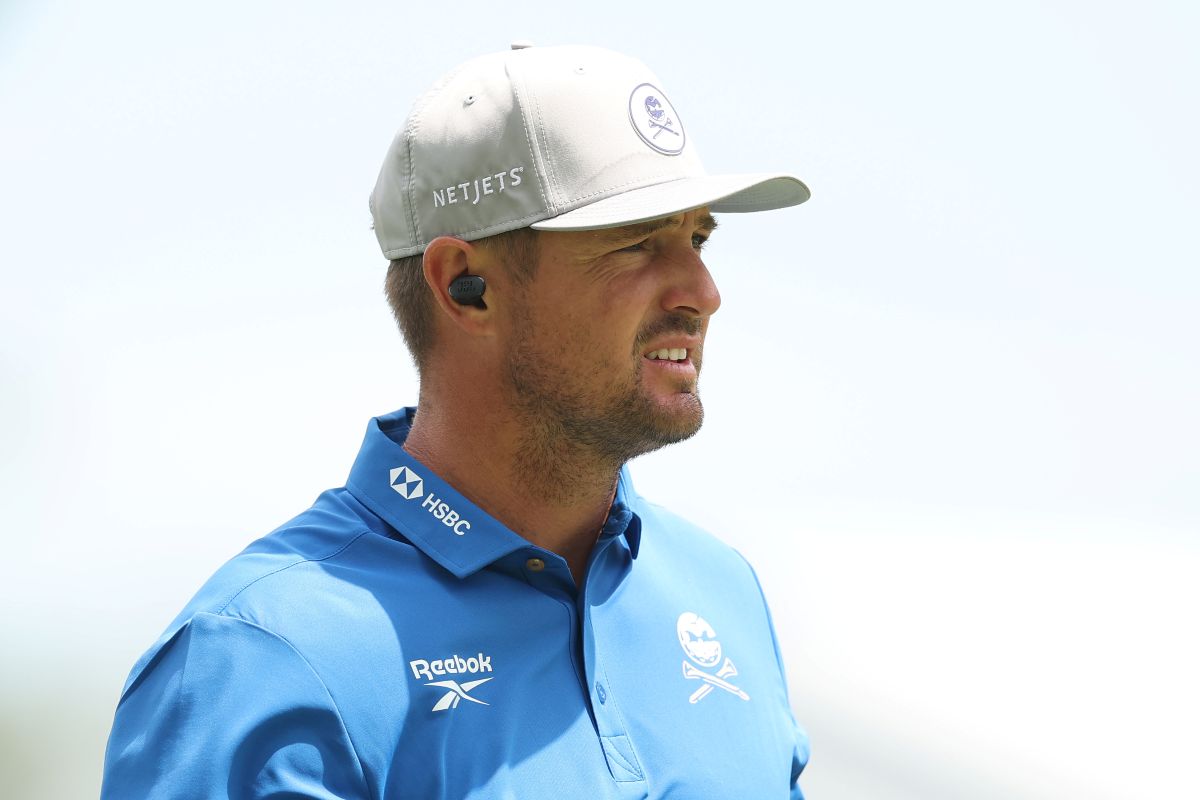
After that initial year, Jon Rahm was the only genuine world class player to make the move, and the loss of Brooks Koepka and Patrick Reed gave the likes of Bryson DeChambeau a much stronger bargaining position in his contract-renewal talks.
But Bryson’s reported $500 million asking price may have been the straw that broke the camel’s back for the PIF.
$500 million? That’s the most ridiculous thing I’ve ever heard!
You’re right. Viewed in a vacuum, it is. Nobody is worth that, and you could argue that nobody is worth the believed $150 million that he was paid initially either. The problem is, they did pay it, so Bryson naturally felt that that was his value then. In the years that have followed, he’s taken his stardom to a whole new level and become the most high-profile LIV golfer by a distance.
His YouTube channel, where he had the likes of Donald Trump as guests, is a major success, and of course he had an actual major success when he beat Rory McIlroy to the U.S. Open at Pinehurst.
If he felt he was worth $150 million in 2022 when he was something of a PGA Tour outcast, then it’s not unreasonable to believe that his newfound popularity had increased his value trifold and beyond, especially when it looked as though losing him back to the PGA Tour would sound the death knell for LIV anyway.
So, he overplayed his hand?
Yes, effectively. If he really wanted to stay on LIV, that is. Everybody has a price, and he may have felt that for $500 million he’d be willing to stay but for anything less he’d be happy to walk away and become a full-time YouTuber, a reinstated PGA Tour member, or even a DP World Tour member for a while.
We’ll probably never know, but without PIF involvement, Bryson is as good as out the door either way.
Would the PGA Tour welcome him back?
Again, that’s hard to say. The same offer given to Koepka was also extended to Bryson, Rahm and Cameron Smith, but they chose not to take it. Back then, the offer had an expiry date and that’s since passed, but PGA Tour CEO Brian Rolapp has always said that he’s looking out for the best interests of the PGA Tour and, should Bryson want back, it makes commercial sense to offer some sort of path.
The same goes for Rahm, while Smith’s value is less clear since the version that left to join LIV and the current version are miles apart.
It would only be a very select few who Rolapp would consider assets, especially since there would be inevitable pushback from large sections of the PGA Tour membership, but he could probably justify bringing back a couple.
Where would the other players go?
Now we’re getting even deeper into hypotheticals. Without an investor to rival the PIF, LIV could continue as a watered down product, offering significantly lower prize funds than the $30 million per event it currently does, but without seeing the contracts – or having a legal expert look them over – it’s impossible to say if that would be in breach of the terms and conditions.
If it is, and would be cause for termination, then they’d be relying on players’ good wills to continue to tee it up for pennies on the dollar. And considering they made all of these players considerably wealthier, they should have good will banked. But, when you’re used to dining on fillet steak and quaffing Grand Cru, it’s hard to switch back to hamburgers and Buckfast.
The smart money suggests they’ll act like rats on a sinking ship.
Those that are DP World Tour members and have fully settled their fines – Tom McKibbin, Tyrrell Hatton, Laurie Canter, and others – would be welcomed back into regular rotation on the European circuit, but there would be a similar uprising from the DP World Tour rank and file if the door was opened to too many of the additional crew.
This means that the likes of Lee Westwood, Ian Poulter, Sergio Garcia and Graeme McDowell, all of whom resigned their memberships to avoid accruing fines, could potentially have to return to DP World Tour Q-School if they wanted to continue playing high-level competitive golf.
The alternative, of course, is to ride off into the sunset with the millions they’ve earned, but most of the players on LIV are highly competitive individuals and the thought of full retirement – especially not on their own terms – is not one they’d easily stomach.
So, finally, when do these questions get answered?
This is the million-dollar question, really. LIV has already cancelled the event scheduled in Louisiana at the end of June, citing weather concerns and competing with the World Cup which we be ongoing in the U.S. at the same time, though they claim that they’re looking at rescheduling it in Autumn, with the possibility of it being a scaled-back event being touted.
That already contradicts with O’Neil’s “exactly as planned” claims – Louisiana is always hot in late June, and the North America-hosted World Cup was confirmed before LIV was even a concept – so the smart money is on ‘sooner’ rather than ‘later’.
Mark Twain famously declared that the report of his death was an exaggeration, before going on to prove it wrong for a further 13 years. If LIV gets 13 months past the initial reports of its demise, I’d be surprised.








Leave a comment