






Some years ago, I wrote an article on ‘sibling rivalry’. It focused on five 36-hole clubs and how each club’s two courses stacked up against the other. For example, Powerscourt’s East and West are very well balanced, so their weighting was 5:5, while Royal County Down’s weighting was 7:3 – I’m a big fan of the smaller Annesley course.
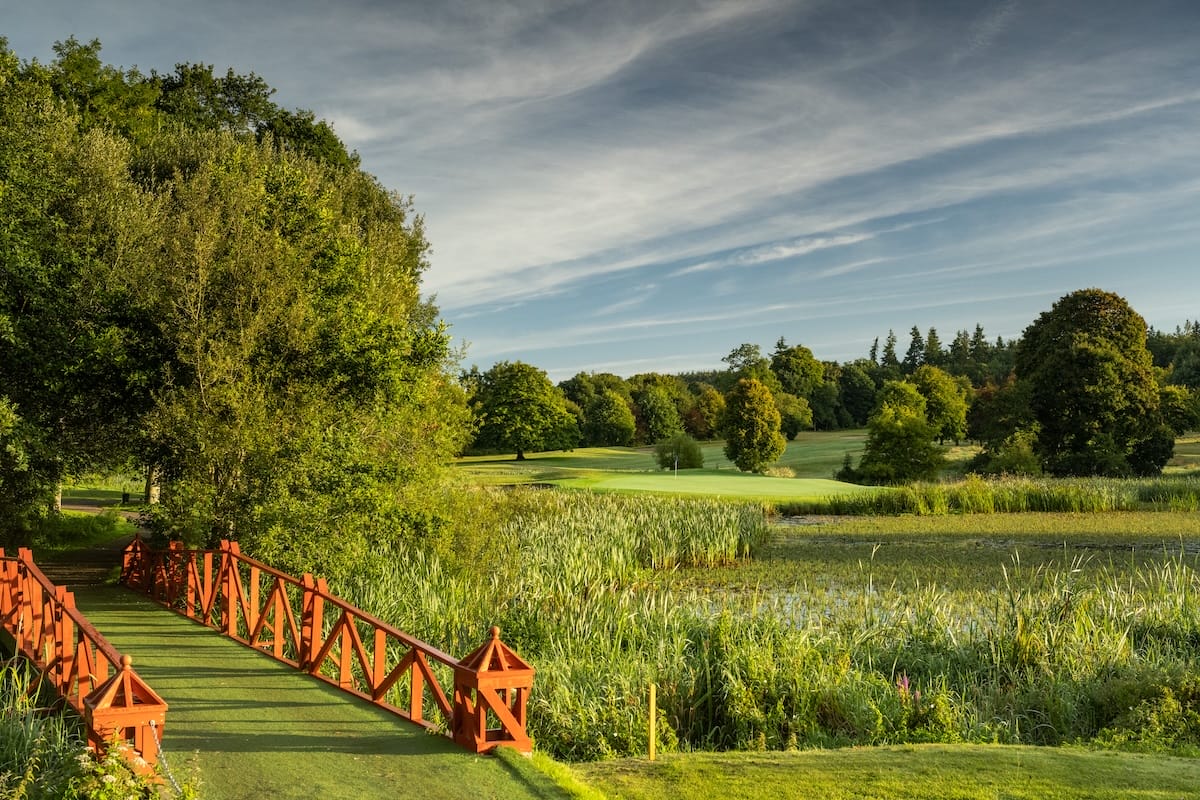
Headfort was not one of the five, but it would have been a worthy contender. The Old Course and the Championship Course are separated by a road and are very different experiences and challenges. A visitor playing one course one day would have no idea what awaits on day two. The Championship course – previously called ‘New’ – has water in play on 13 holes; the Old has a dry ditch on two.
The shape of the land is different, the nature of the holes is different, so too are the space and atmosphere. The differences continue with the greens and bunkers. The Old was founded in 1928 and designed by Val Kelly and Pat Kinsella, while Christy O’Connor Junior’s Championship course opened in 2001.
The only area of common ground is the trees. Big, old, colourful and majestic – they are everywhere. Many stretch back to the 18th century. Two sycamores, in particular, were planted at the same time, around 1800. By pure coincidence one is on the 12th hole of the Old, while the other is on the 12th hole of the Championship. They’re impossible to miss. The Headfort Estate, upon which these two courses roam, is revered for its botanically significant tree collection.
Serbian Spruce, Red Fir, Atlantic Cedar, Oak, Giant Redwood, Delavays Fir, Beech, Magnolia, Japanese Cedar. The list goes on and every tree is over 100 years old – and that’s just on the 11th hole of the Championship course alone. On the Old, to the right of the 1st green, is a beautiful tree, its main branches arching like arms cradling the sky. It is a ‘common’ oak but there’s nothing common about it.
As a golfer, you’ll spend more time avoiding the trees than admiring them, but this is a beautiful, peaceful place to play golf. It is, literally, good for your health.
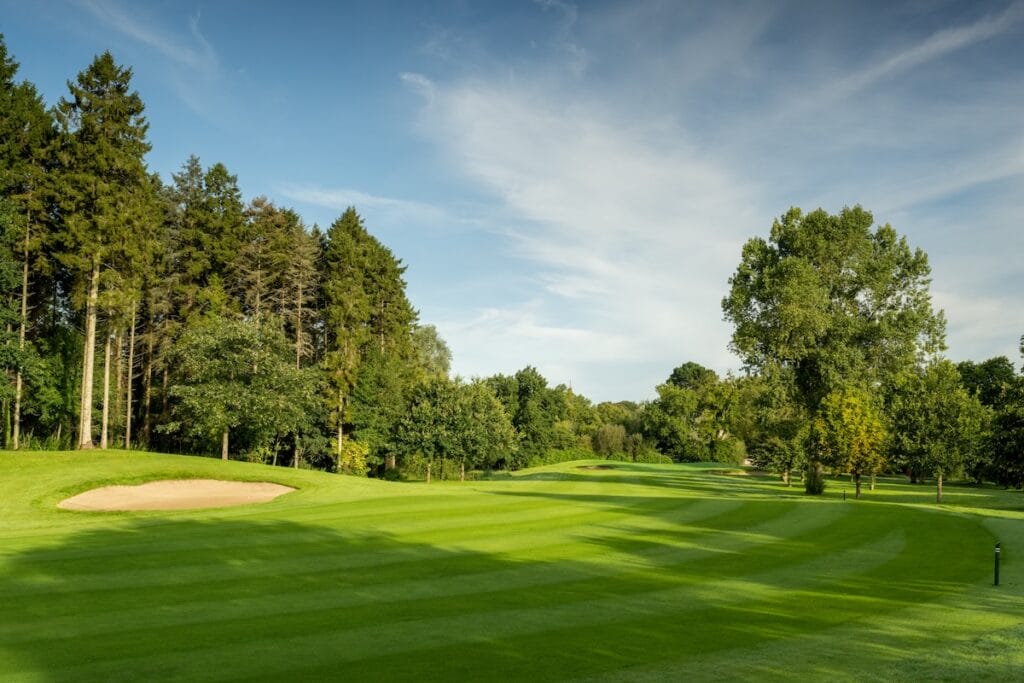
Championship Course
A layout for the course was presented to the club in the 1990s, shortly before Christy Jnr’s involvement. Not many people know that. It was a plan that Christy expanded upon. He went into the forest and ‘found’ today’s opening three holes. No one would deny that these three – the 1st especially – provide a thrilling start.
I have no hesitation in saying that the Championship course does not get the recognition it deserves, even after hosting the European Challenge Tour in 2019 and 2023. This is one of the best in Ireland (39th in Irish Golfer’s Top 100 Courses, and 12th out of our parklands), and one of the prettiest.
The course is routed over and around two islands on the River Blackwater. Back in the day, the Headfort family had channels dug to increase the reach of the river and these waterways appear on several holes (2nd, 3rd, 4th, 7th and 12th) as well as creating the islands. The larger island hosts the 4th and 9th tees, the 3rd, 7th and 10th greens, and the entirety of the par-4 8th. The smaller island, which is a botanical wonderland, is home to the par-3 11th, which plays directly towards Headfort House. It is also home to the graves of members of the Headfort household. Given how dark the corridor is, from tee to green, it is a fitting location for a graveyard, tucked away to the right of the hole.
Of all the key ingredients that make this course special, it surely has to be that the opening ten holes have water in play. If you didn’t know there were two islands, you probably wouldn’t even notice, such is the layout of the land and the course routing, but you will find yourself crossing eight bridges in all. The 297-metre par-4 3rd has a healthy dose of water in front of the green, which is wrapped tightly in trees. It is only the third hole but it requires your most accurate shot of the day. The par-3 4th is a close second. Your tee shots on 9 and 10 require a decent carry over the river to reach the fairway, and the 9th has a second lot of water barging in unseen, closer to the green. At least when you walk off the picturesque 12th you can breathe easier… until the 17th. Holes 13 to 16 have strong slopes instead of water and errant shots are not punished anything like as harshly. This is where the terrain rises to Headfort House, with the 466m par-5 14th winding ever upwards, only for the 490m par-5 16th to take you back down to the river, for a water-laced finish. All the while there is a lovely feeling of space and freedom – except on that positively claustrophobic par-3 11th – and lazy elegance.
If there is a quibble it’s that the four very attractive par-3s are of too similar a length – 129m, 131m, 133m, and 141m. On the other hand, they all play in distinctly different directions.
Old Course
Ask a golfer to describe the Old course and the reply will centre on trees and the size of greens. The trees are enormous; the greens, not so much. The Old is known for its tight tree-lined corridors and its small putting surfaces, and it rambles over more compact and boisterous terrain than the Championship. This is a completely different challenge and while it is only 50 metres shorter (from Yellow tees) than its sibling, your club selection off the tee presents a sterner challenge.
I played here last month – just before the bunkers re-opened – and my driver misbehaved. I gave it two chances and then left it in the bag for the rest of the day. You cannot go wild and expect forgiveness. A straight three-iron kept me on fairways and still gave me plenty of chances on approach shots. The par-4s fall between 295m and 377m. Only three are over 350m, while the longest on the back nine is 339m. The par-5s are 425m, 426m, 432m and 494m. It is a par 72 and a modest 5,748 metres From the Whites it is 5,936 metres.
There are no severe doglegs here but there’s enough bend to wreak havoc on the wayward. Four holes curve to the right, six holes to the left. The 308m 9th requires your best fade; the 295m 15th your best draw. This is a day of discipline off the tee – and very accurate approach play to the greens. Grab a pen and write ‘course management’ on the back of your hand. It’s the most important advice I can give you.
The greens are fascinating. They’re small, and many come with stout, rippled eyebrows encasing the putting surfaces. An offline shot might find those aprons a great help, deflecting a ball towards the flag, or it might catch the wrong side and be sent scurrying away down a slope. You win some, you lose some. Other greens have more clear-cut falloffs. The 4th green, out at the far end, where the new 300m-long practice facility has just opened, has both. There are some strong green slopes, too, with the 3rd being a perfect early example of why you want to be putting from below the hole. These have the feel of traditional greens with plenty of challenge but not too much fuss.
The club has recently completed a significant overhaul to the Old’s bunkering, and it has been a remarkable case of restraint. Before the project started there were 47 bunkers. Today, there are 39, with a reduction in total sand surface of a third. Some have been moved, combined and/or tweaked but, for the most part, they are the same bunkers as before. Does that seem odd? Perhaps. The heart of the Old Course, however, has always been the challenge set by the trees and the greens. The bunkers, while important, were not a defining characteristic, and the club chose to keep it that way. It is a brave move but one that honours the spirit of this parkland.
The goal was to modernise the bunkers as they had never been correctly drained. The project began in October 2025 and was completed by March 31. This included six weeks lost to wet weather. It was part funded by a Sports Community Facilities allocation of €182,717.
Blissfully, in my view, there is no one stand-out hole on the Old Course. Everything is good. The par-5 1st is the perfect introduction of rolling terrain, threatening trees and the green on an uphill slope. Play it, enjoy it, learn from it. Spend some time on the par-3 2nd and par-4 3rd greens, studying the slopes and eyebrows. Learn from those, too. The information you glean will prepare you well for what’s to follow.
It is not hard to see that visitors come for the glamour, drama and scale of the Championship course, with many bypassing the Old altogether. Personally, I suspect that golfers regard the Old as a sterner challenge, where your driver can be a liability, and where ‘fun’ has to make way for discipline. But, if you play intelligent golf, it is every bit as rewarding as its sibling.
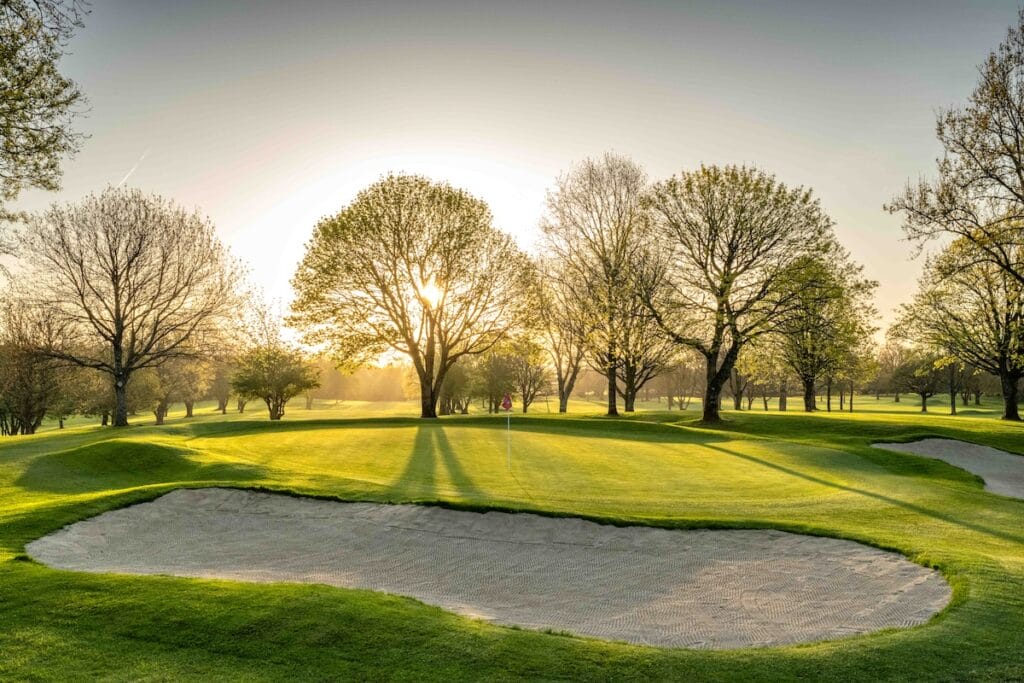
Sibling Rivalry
So, on balance, how do the two courses shape up in terms of sibling rivalry? I imagine a lot of golfers would say 7:3, because the big and beautiful beast that is the Championship course tugs at the heartstrings. For me, though, there’s something about the Old that steers me more towards a 6:4 weighting. Playing smart golf has its own rewards. But, overall, what an amazing place to find two such special courses, and so close to Dublin.
Headfort is just 40 minutes from Junction 6 on the M50 – and the green fees are generous, to say the least. The club also does packages with the Headfort Arms Hotel, in nearby Kells. You’ll find a long list of Open Competitions on the club’s website – www.headfortgolfclub.ie
The Headfort Estate has a rich story to tell, should you feel inclined to look into things such as the Book of Kells, and Lady Rosie Booth – or Boote – an Irish showgirl who married the 4th Marquess of Headfort, in 1901, in what was quite the scandal of its day. She went on to become Lady Captain of Headfort Golf Club.












Leave a comment