
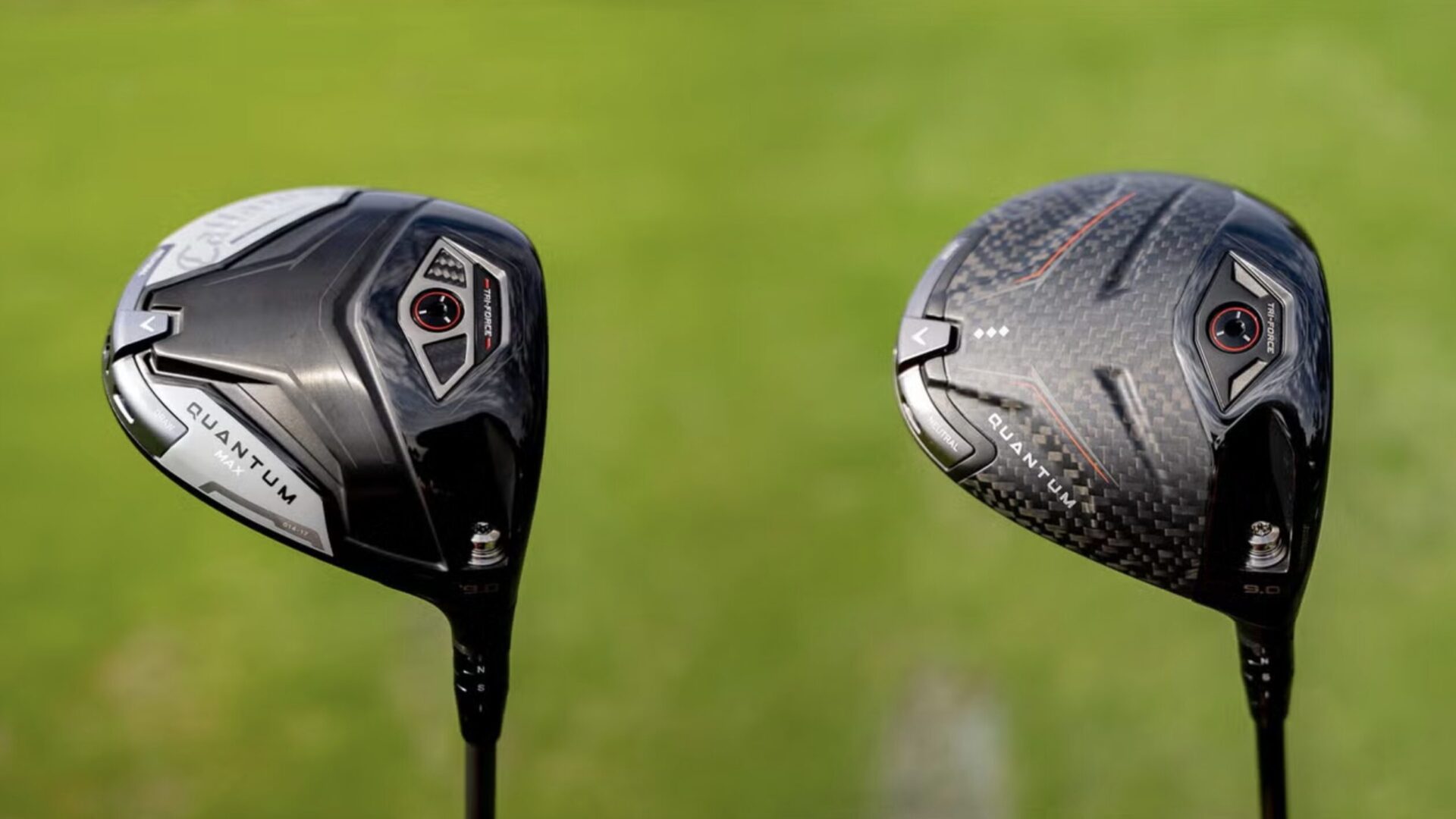









Callaway is back to being a speed company. With the company’s new Quantum line of drivers, fairway woods and hybrids, the name literally implies a fundamental shift in what they are doing.
That’s evidenced by the powerhouse of the new lineup, the multi-material Tri-Force Face in the Quantum drivers, comprised of Titanium front and carbon fibre backing bonded by a Poly Mesh, a military-grade, high-strength polymer. It’s the first time the material has ever been used in a golf club.
“With Quantum, Callaway is taking a massive leap in innovation to the future of driver face construction with the first three-layer face,” Jacob Davidson, Callaway’s VP of Product Strategy, told Irish Golfer. “We’ve been constrained by the world of single materials, but now with our knowledge of Ai, to be able to have three layers has opened up so many new opportunities for R&D.
“This is the next realm of where things can go to find more speed gains.”
Callaway has already seen major conversions to the new driver with 12 players in the 60-man Dubai Invitational on the DP World Tour gaming one this week. Xander Schauffele and Akshay Bhatia have also already converted to new Quantum Triple Diamond models.
What’s actually new with Callaway Quantum Metalwoods — and why you should care
Tri-Force: Tension vs Compression
At the core of the new Quantum drivers is the multi-material Tri-Force face, which features titanium and carbon fibre bonded by the Poly Mesh. Callaway used both materials in the face, with titanium on the outside and carbon behind, because each has a unique advantage that complements the other.
“During the collision that happens when a ball strikes the face, you’re seeing deflection in the face,” Brian Williams, Callaway’s VP of R&D said. “And that’s what this Tri-Force face is all built around, is the idea of deflection and forces that are in place.
During impact, the front of the face is placed under compression, where titanium is strongest. On the inside of the face, the back is being stretched out and put under tension. Tension is where carbon fibre is strongest. Basically, the carbon fibre acts as a reinforcement to the titanium, which was made 14 per cent thinner than in the Elyte drivers, which Williams said allowed them to drive more ball speed without compromising durability.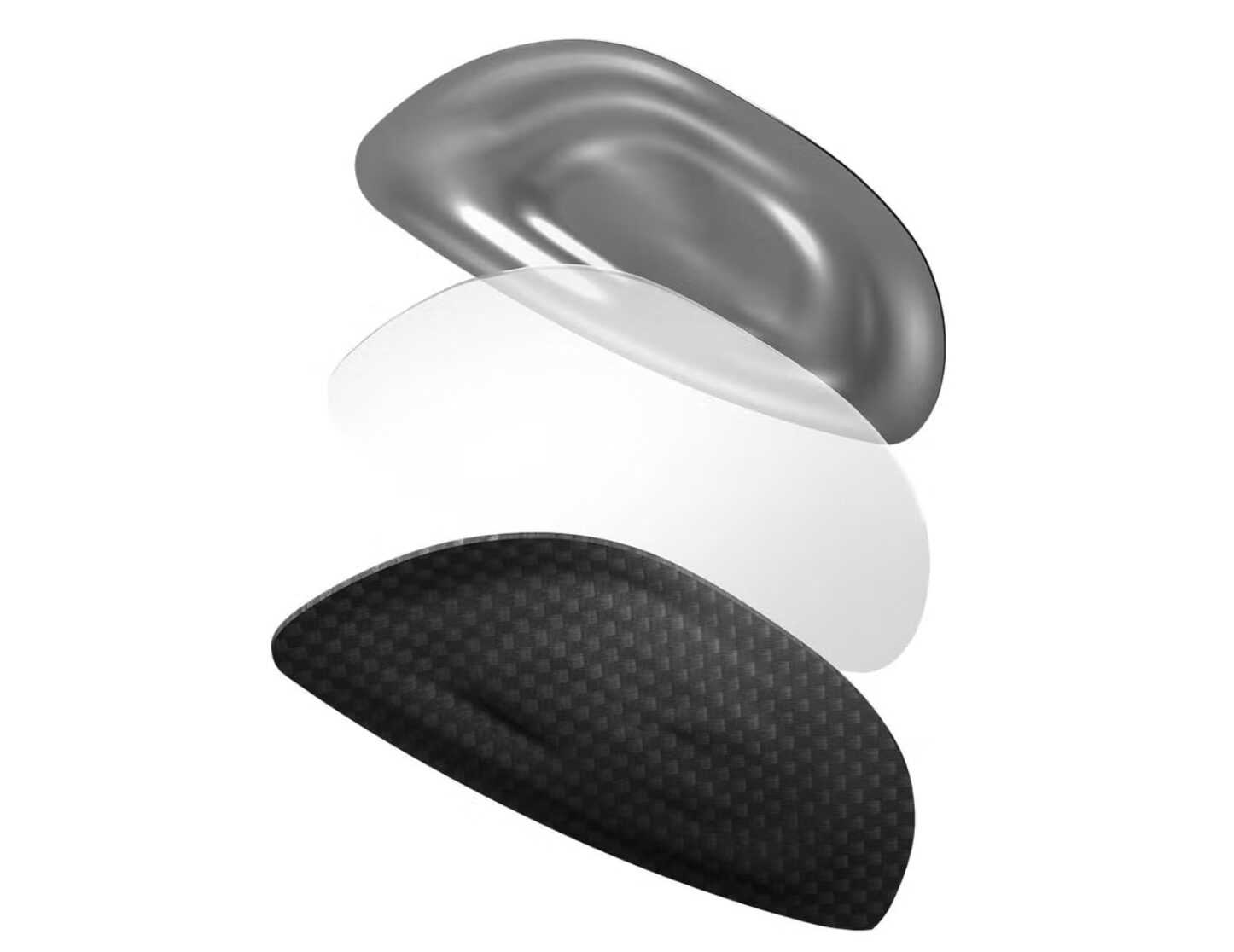
The key was finding the Poly Mesh material not only bonds the two layers of the face but also provides optimal energy transfer.
“This is lightweight, it is strong and it allows the whole face to flex and recover faster,” Callaway Sr. Manager of Product Strategy & Category Management, Zack Oakley, said. “And so when we talk about Tri-Force, I think the key thing is, this isn’t just a single material face. This is a fully integrated performance system that is designed for maximum ball speeds.”
Speed Meets Smarts
More speed and all is great, but it doesn’t mean much if you have to sacrifice variables like forgiveness and optimal spin to get there. One thing that Callaway’s investment in artificial intelligence allows them to do, however, was model how the new materials of the Tri-Force face would interact with each other. While titanium and carbon deflect differently under varying amounts of stress, the Poly Mesh allows it to work as one unit and Callaway designers are able to tune the micro deflection rates with the help of the A.I.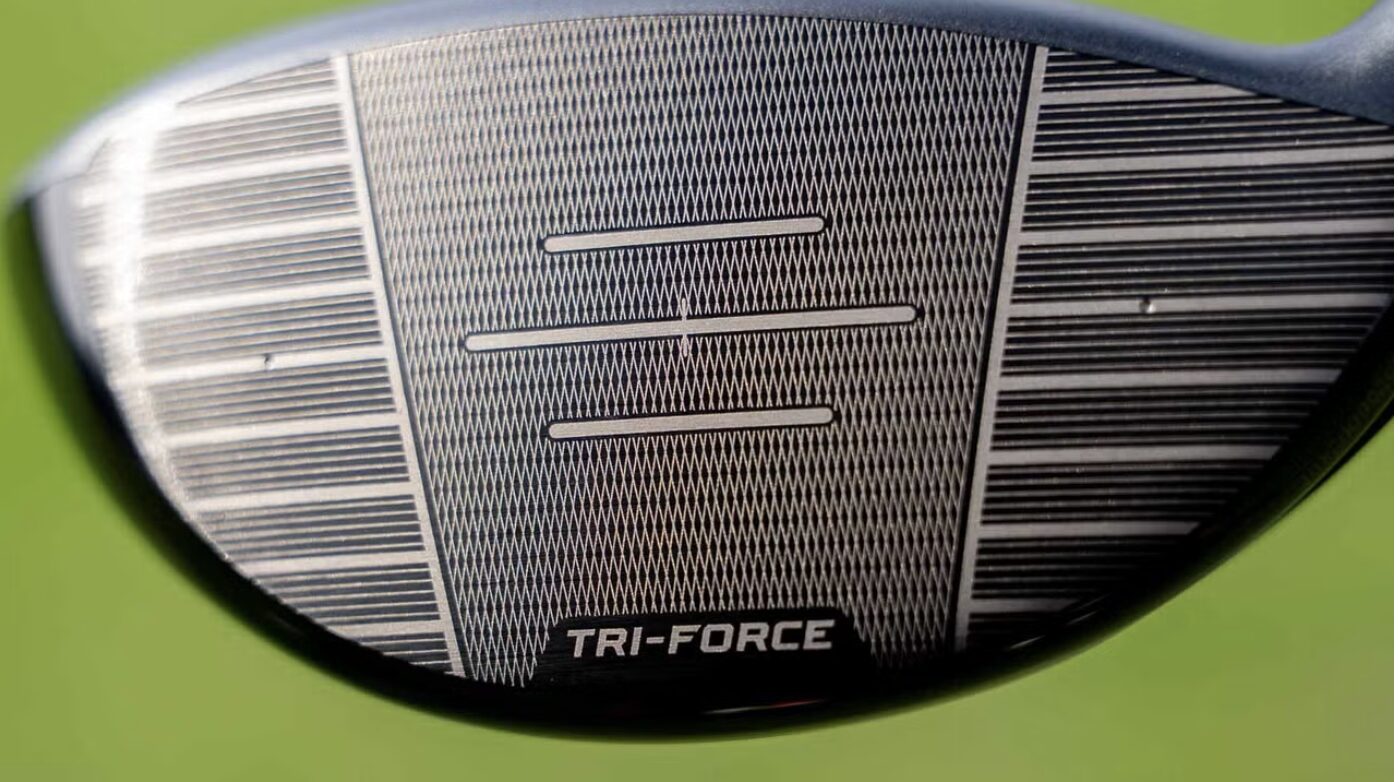
That’s important because Callaway knows you’re not always going to hit the centre of the clubface. So, while whatever you can do when you hit it out of the guts is great, the most meaningful gains are still getting speed outside of the middle of the face.
“What the A.I. is doing now goes way beyond shaping a face,” Oakley said. “We’re modelling how different materials deflect together at impact, which lets us control spin and launch across much more of the face, not just perfect strikes.”
The result is that Callaway can tune spin rates from different parts of the face to optimise carry distances. That means the ball is going to spin less when you hit it low on the face and spin more when you hit it on the high toe, giving you much more consistency.
The five models in the Callaway Quantum Driver lineup
Callaway Quantum Max driver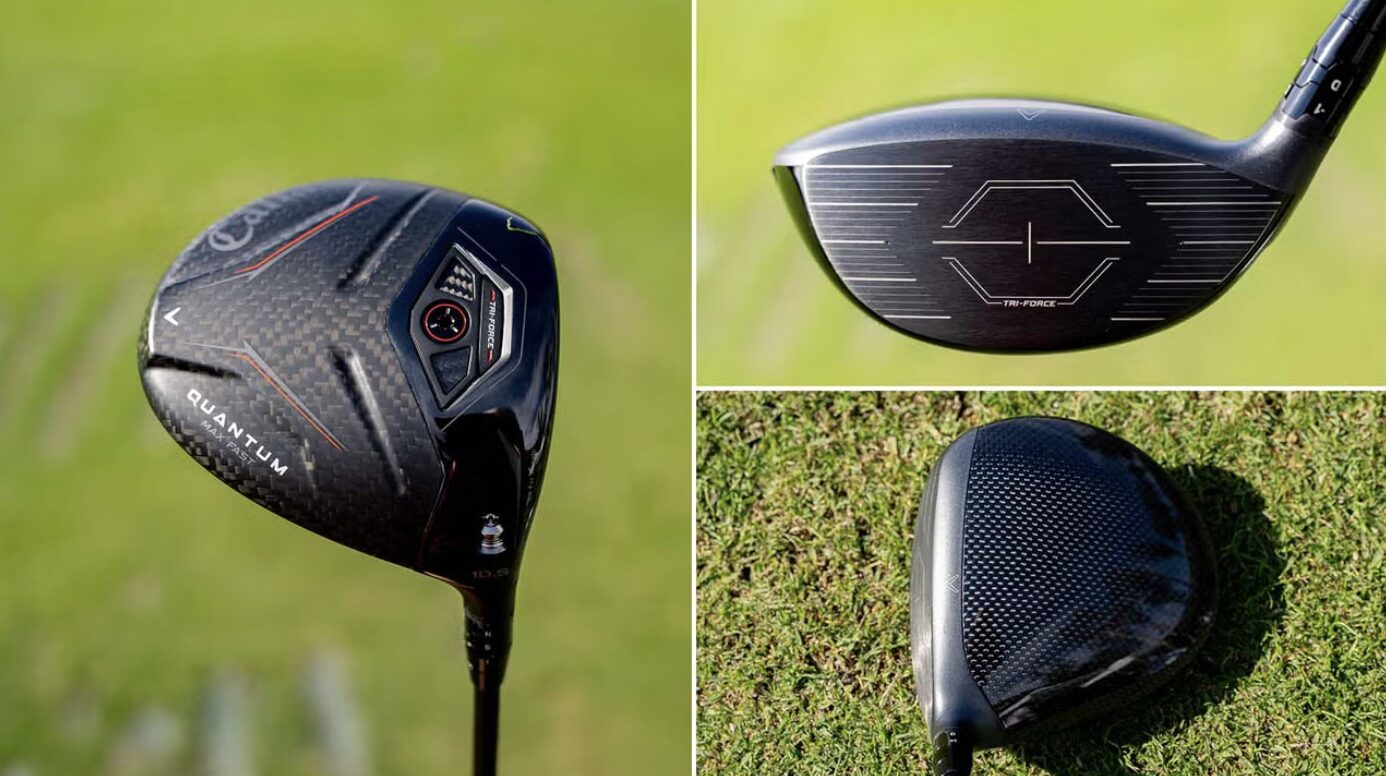
What is it: A high-MOI and more rounded shape, the Quantum Max features a new adjustable weight in the back to dial in either draw or fade bias and a front adjustable weight to tune either swingweight or front-to-back CG. Available lofts: 9˚, 10.5˚, 12˚
Who it’s for: Players who want a high-MOI driver that is unapologetically fast.
Callaway Quantum Triple Diamond driver
What is it: The Triple Diamond remains the tour preferred, 450-cc, low-spin head option. While previous Triple Diamond heads were fade-biased, the Quantum Triple Diamond starts in a more neutral configuration with an 8 g weight in the back toward the heel, with the option to make it more fade-biased by moving that weight to the toe. Like the Max, there is also a forward weight port to adjust swingweight or front-to-back CG. Once again, the 360-carbon chassis saves weight in the Triple Diamond head, allowing it to be redistributed elsewhere. The neutral weight setting allows the driver to perform more like the popular Triple Diamond Tour Draw head that was introduced last season. Available lofts [only for woods]: 8˚, 9˚, 10.5˚
Who it’s for: High-speed and high-spin players looking for a more neutral start line than previous Callaway Triple Diamond drivers.
Callaway Quantum TD Max
What is it: One of the most popular models on Tour, the Triple Diamond Max is available at the retail launch for the first time this year after coming out in the spring the last two years. The TD Max has the same features and profile of the Triple Diamond, but in a 460 cc head size. Available lofts: 8˚, 9˚, 10.5˚
Who it’s for: Faster golfers who need just a touch more spin, like those who play a draw to maximize carry.
Callaway Quantum Max D driver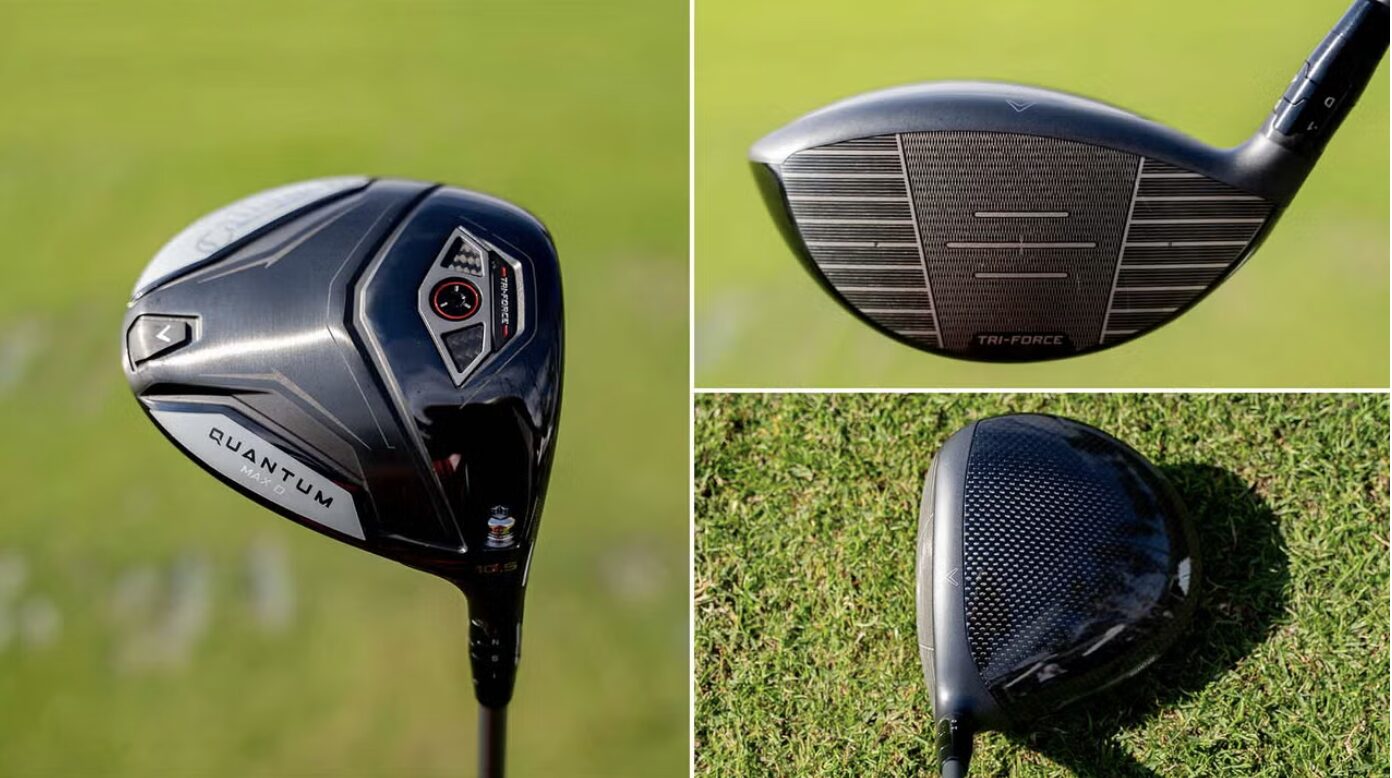
What is it: A draw-biased version of the Max with weight mass concentrated in the heel to help the toe turn over faster. The only adjustable weight is in the sole for swingweighting. Available lofts: 9˚, 10.5˚, 12˚
Who it’s for: Players who fight a slice or players who never want to see the ball start right.
Callaway Quantum Max Fast driver
What is it: For the first time, the ultralight Max Fast model adopts the 360-carbon chassis of the Triple Diamond models to remove extra weight and allow players to swing as fast as possible. The only adjustable weight is in the sole for swingweighting. It also comes stock with a 40 g shaft and a lightweight grip. Available lofts: 10.5˚, 12˚
Who it’s for: Slower players who need a boost in speed.
Callaway’s new Quantum family of metalwoods are available at McGuirkd Golf now for pre-order and will arrive at retail locations on Feb. 13th. Quantum Max and Max D drivers will cost €629, while the Triple Diamond, Triple Diamond Max and Max Fast drivers each cost €679.












Leave a comment