








During a Thursday press conference at the Masters, Tom Watson was asked what one change he would make to a hole at Augusta National Golf Club.
“I’d fill in the creek in front of No. 12,” he joked.
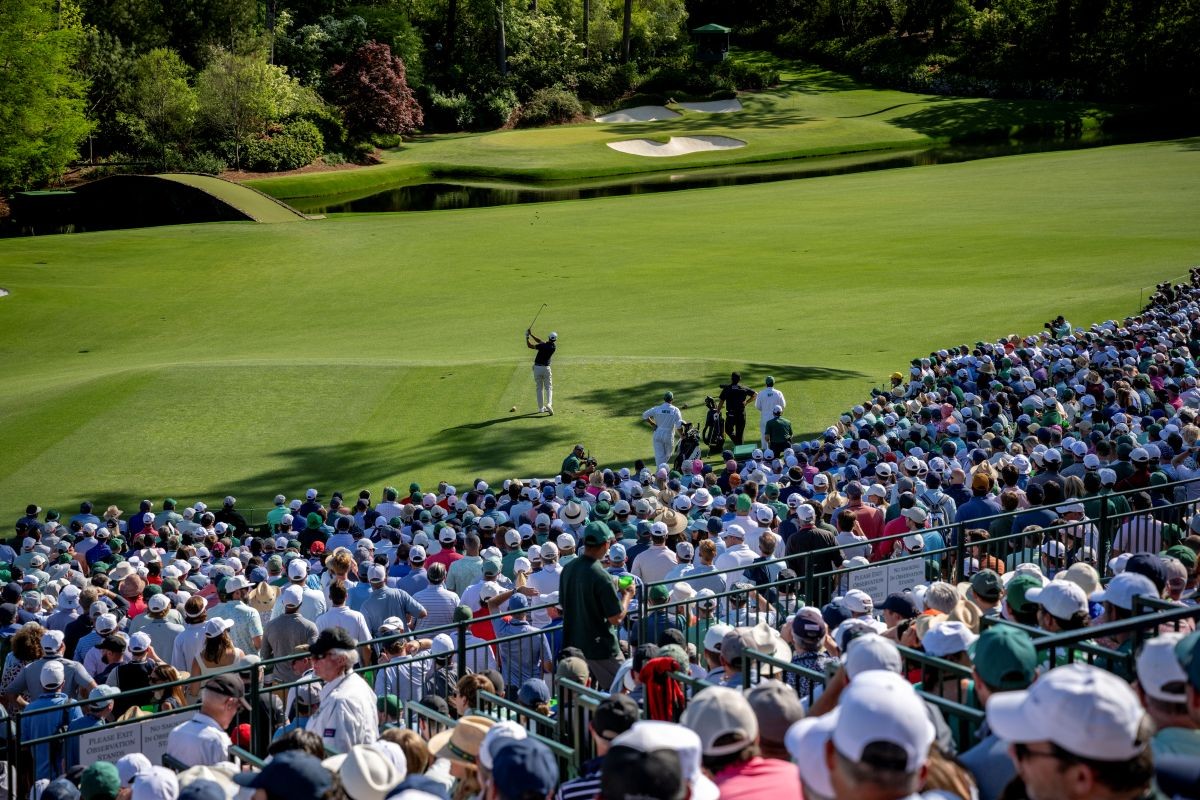
The par-3 12th hole — and Rae’s Creek, which guards it — has long been one of the most consequential holes at the Masters at Augusta National Golf Club. Tournaments have been won or lost there for decades. There are countless examples, although some of the most popular recent ones are from 2019 (when Tiger Woods won as the competition all found the creek) and in 2016 (when Danny Willett won after Jordan Spieth rinsed away his tournament on 12).
But what makes the hole particularly hard is a complex answer. It’s the nerves that come with it being so late during a round, it’s the intimate nature of the shot, it’s the shape of the green and it’s also the wind.
The swirling winds down in Amen Corner can trick even the most astute players and caddies. Some look at the flag on 12 to gauge the wind. Others to the flag on 11, or the trees above 12, or even down at the flag on 13.
During a recent visit with veteran caddie Ted Scott, who has caddied for four Masters wins (two with Bubba Watson and now two with Scottie Scheffler), he explained the “Eddy Effect” that makes the 12th so difficult. Scott didn’t even know of it until the Sunday before the 2012 Masters, when he was watching the end of the LPGA’s Kraft Nabisco Championship (now the Chevron) on TV. When the broadcast finished, the next programme was a scientific look at the 12th hole at Augusta National and why it’s so difficult to figure out the wind.
“There’s an effect called the ‘Eddy Effect,’ which is actually a term that you typically see in rivers where water spins in a circle, makes a little whirlpool,” Scott said, relaying what he learned while watching. “Well, here’s what happens. In a 5 mph wind in Augusta, the Eddy Effect happens. It’ll triple the wind speed and it creates a whirlwind, so you don’t know which way it’s going. That’s why you look over at 11 and the flag’s going this way. And then you throw grass up here it’s going that way, and then you look at the flag on 12 and it’s going that way and the trees are going this way. It’s called the Eddy Effect, it’s actually a scientific effect.
“So where do you look for the wind?” he concluded. “I have no idea, but here’s the coolest thing. When that was over, I told Bubba, I said, ‘Listen, this week when we get on 12, don’t blame Teddy, blame Eddy.’”
Scott also says the tee shot on the par-3 12th is the most difficult on the course for a right-handed golfer.
“The way the green is shaped, if you pull it you go long, if you push it you go short in the water,” Scott says. “A left-hander like Bubba, if he pulls it or pushes it he’s on the green because of the angle of the hole. But if the wind’s not being cooperative, it’s a super-difficult hole — you might hit it anywhere, and that can really change the course of the tournament.”
Scott doesn’t remember exactly how Watson played the 12th back in 2012 when he first learned of the Eddy Effect, but he does remember how he finished.
“He won,” Scott says. “That’s all I have to say.”
This article originated on Golf.com












Leave a comment