









As Storm Chandra’s entrails are scattered across the country, with memories of last year’s Storm Éowyn still lingering, you’d be forgiven for putting golf to the back of your mind.
Chilly, wet and windy on the links courses – and the parklands? Forget about it. Even roofed driving ranges are less than appetising as the combination of cold range balls, cold fingers, and cold iron faces send shivers through your body.
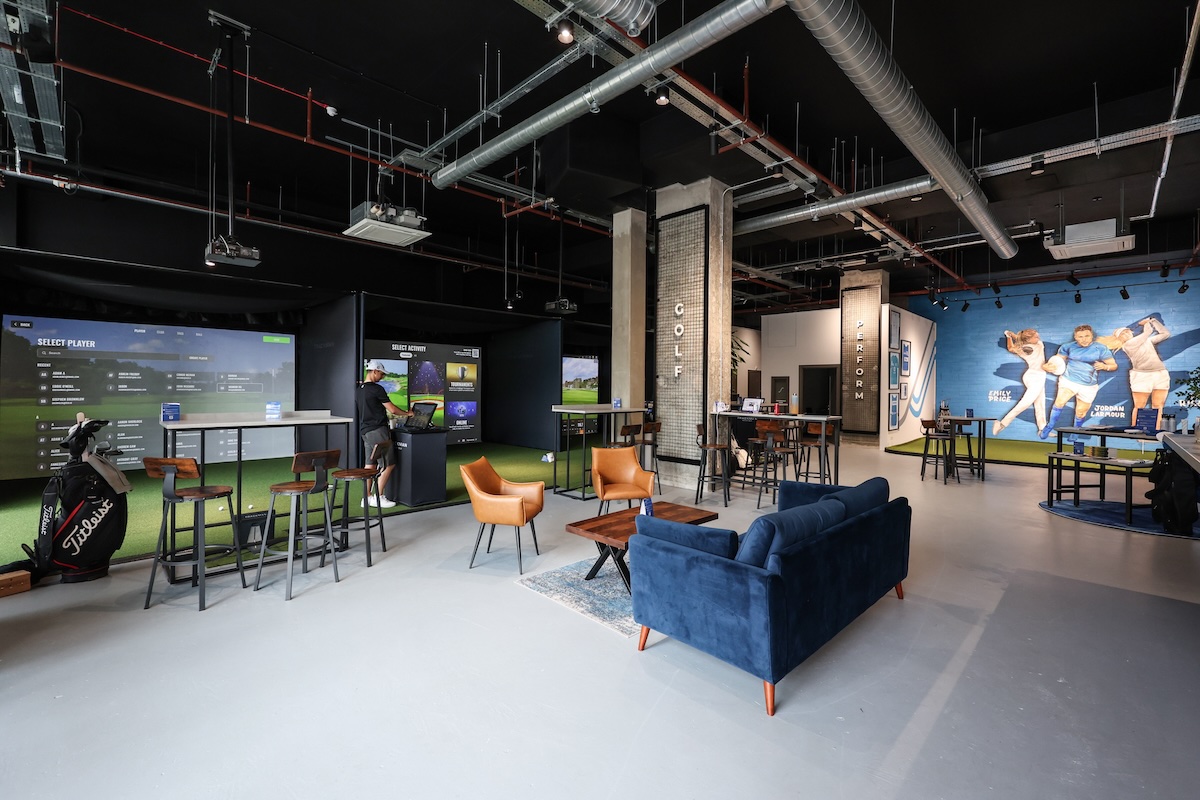
But in Sandyford and Charlemont, golfers are swinging away in warmth and comfort at Sigmoid Golf and Sigmoid HQ, morning, noon and night.
Founded in 2023 by Rob Browne, a sports management specialist who played a key role in Five Iron Golf’s – a similar, tech-infused indoor golf and entertainment venue in New York – expansion into the wider United States, and David Kearney, a PGA Professional and high-performance expert, Sigmoid Golf is part of a growing global movement reshaping how people experience golf.
It is not a replacement for traditional golf, nor does it intend to be. Instead, it exists alongside, occupying a vital space in golf’s ever-emerging digital landscape.
What Sigmoid Golf offers is the accessibility and flexibility of modern technology, housed in a welcoming space that caters for golfers of all levels whether they’re tour pros looking to fine-tune their games with the vast array of data available, or complete beginners holding a golf club for the first time.
And it’s the success in attracting the latter that has been the most impressive aspect over the past two-and-a-half years.
“When we first launched in Sandyford, I think there was the perception that it was just for elite players and professionals, but that wasn’t our goal at all,” said Browne, who brought his Five Iron experience and tailored it to fit the Irish market. “Our target market is really anyone who wants to get better, and beginners certainly fall into that category.
“We obviously do get scratch golfers and pros in, but David could be working on swing mechanics with a pro and then showing somebody how to hold a club in his next lesson.”
While females make up 51 per cent of the Irish population, they still only account for 20 per cent of the nation’s golfers, meaning that the potential for growth in women’s golf is huge.
And Sigmoid Girls Golf Club is doing just that.
A women-only initiative designed to lower the barriers to entry that have long plagued golf, the concept is deliberately non-intimidating. Events combine golf with activities such as yoga, Pilates, or sauna sessions. Participants arrive as part of a group, often with no prior golf experience, and learn together in a supportive environment. Smaller group coaching sessions – six per class – run weekly across both locations.
The results have been extraordinary.
A total of 167 girls have hit golf balls across seven events since July 2025, while 178 have started playing in either the ‘girls only group lessons’ with David, or through ‘Sculpt and Swing’, an early-morning initiative that combines Pilates and golf instruction.
The phrase ‘growing the game’ is oft repeated, but in Sigmoid Golf’s case, it’s much more than a catchphrase, and those figures are proof.
The physical environment plays a role too. Sigmoid’s studios are compact, modern, and intentionally informal. There is no sense of being watched or judged, no sprawling range where beginners feel exposed. Even the café – serving high-quality coffee and open to non-golfers – acts as a soft entry point.
“People come in for coffee, see others playing, and realise it’s not intimidating,” Browne explains. “Then a conversation starts, and suddenly they’re booked into a women’s event.”
One of Sigmoid’s most striking achievements has been reframing golf as something closer to a gym habit than an all-day commitment. Members drop in for 30 or 60 minutes before work, during lunch, or on the way home, hitting balls, reviewing data, and leaving their clubs on site.
The initial success of the Sandyford location inspired them to open a second outlet in Charlemont, close to the Green Line Luas stop and in the heart of the south city’s business district.
“In Charlemont, nobody drives,” Browne says. “They walk in, take the Luas, practise for an hour, and head back to work. That convenience is huge.”
This approach speaks directly to a broader shift in how people allocate their time. As urban living intensifies and free hours become scarcer, the traditional four-hour round increasingly feels like a luxury. Sigmoid doesn’t try to compete with that experience – it complements it. Members might practise during the week indoors, then play on a course at the weekend, or not belong to a club at all.
Technology is the glue holding this model together. Sigmoid’s facilities are built around TrackMan simulators, which provide detailed feedback on everything from club path and ball speed to launch angle and spin rate. For many users, this is their first exposure to the data they regularly see broadcast during professional tournaments – or more recently, showcased in tech-heavy formats like TGL.
“People see these numbers on TV now,” Browne notes. “Then they come in and think, ‘Right, what’s my club speed?’ It connects the amateur game to what they’re watching.”
Sigmoid has also found success by positioning golf as a workplace wellness activity rather than a networking cliché. Corporate memberships allow companies to purchase blocks of simulator time for staff, who can book sessions independently throughout the week. Lunchtime group lessons are common, and again, participants range from low-handicap players to complete beginners.
“It’s not about client entertaining,” Browne says. “It’s about employees enjoying something active and social.”
In city-centre Dublin, where space is limited and stress levels are high, that model has proven particularly attractive, and it’s just what the game needs as post-pandemic participation remains strong, and high-profile success stories have made the sport culturally relevant again.
At the same time, housing pressures, environmental concerns, and urbanisation mean traditional golf infrastructure faces increasing scrutiny.
Indoor, digitally driven facilities like Sigmoid offer a partial answer: low-footprint, high-impact spaces that widen access without replacing courses altogether.
Inspired by the success of the likes of Rory McIlroy, golf has never been more popular amongst the younger generations, and their tech-savviness, combined with the instant feedback the technology provides, means the sky is the limit for youngsters who make simulator sessions part of their regular routines.
“Younger players are growing up with this technology,” Browne says. “It’ll be fascinating to see how good they can become.”
With plans to expand, a growing membership base, and a proven ability to attract new demographics, Sigmoid Golf feels less like an experiment and more like a blueprint. Not for the future of golf in isolation, but for a version of the game that understands modern life, embraces digital innovation, and fully opens its doors to those who once felt excluded.
For more information visit www.SigmoidHQ.com













Leave a comment