
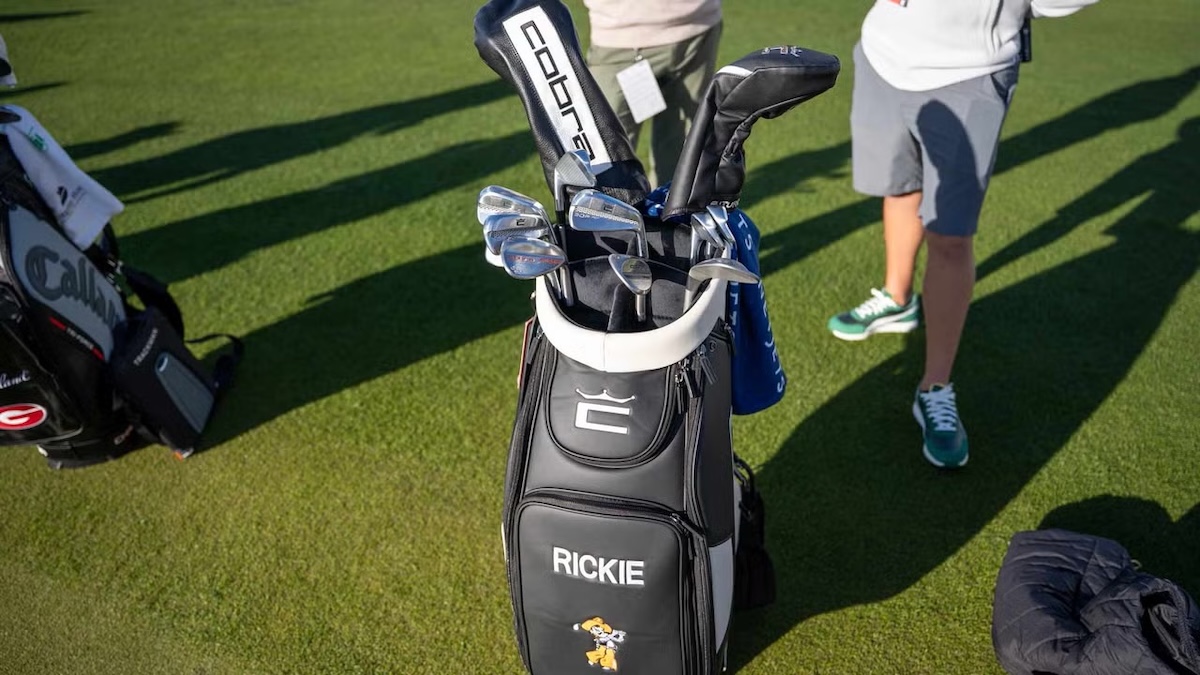








Rickie Fowler, now in his 17th season on the PGA Tour, has quietly become a certified gear geek.
This year, perhaps, more than ever.
In preparation for 2026, Fowler changed just about every club in his bag, from a new set of Cobra 3DP RF irons (custom printed) to a 14-year-old Scotty Cameron Circle T putter that replaced his L.A.B. Golf model. So far, it has resulted in three consecutive top-25 finishes to start the year after a hot finish last season that has earned him invites to 2026’s Signature Events.
Fowler’s gear switches weren’t impulsive; every move was thoroughly vetted by Fowler himself and Cobra Director of Tour Operations Ben Schomin — a process that Fowler relishes.
“I love testing and it’s not always me searching for stuff for myself,” Fowler told GOLF. “There’s plenty of that that we do do, and seeing are we in the best stuff possible? But I also like having a good understanding across the board, whether it be other irons, different shafts. Because I enjoy being able to get feedback to other guys.
“I’ve always been an equipment nerd, golf nerd.”
Before something ever goes into his bag, Fowler likes to understand everything about that club. It’s the reason it took him and Schomin a year to put into play the new Cobra King Tec Mini Driver that was designed specifically for Fowler.
While much of that tinkering may be super high-level and reserved for golfers who play for checks, there’s still a lot to learn from Fowler’s bag.
Take for example, how he checks his ego by playing a 3DP Cobra iron that matches the shape of many players’ distance clubs. Or how he builds his 5-wood the length of a 3-hybrid to prioritize control and versatility.
Sure, Fowler has unique needs as one of the game’s best players over the past 16 years, but there’s still lots from his bag that you can apply to your own game.
Breaking down every club in Rickie Fowler’s bag
Ball
2021 Titleist Pro V1
Fowler’s five-year ball-and-glove deal with TaylorMade expired at the end of 2024, which led him to go back to a Titleist ball, which he’d played his whole career before 2019.
This year, he’s once again a ball ambassador for Titleist and playing the Pro V1, which was the same model he played before his move to TaylorMade in 2019.
“For me, with the Pro V1, it matches my window a bit more,” Fowler told Titleist. “I’ve always been able to hit the ball up in the air if I need it. So Pro V1 is going to be the lower-launching, better flight into the wind. And when you start going into aerodynamics and the cover, the Pro V1 has a little less lift in it. For me, it holds its flight better, it’s not going to climb.
“I don’t want to feel like I have to, back into the wind, lean into one or try and do anything extra to keep it down too much… [and] like I said I’m able to launch the ball in the air and keep spin up if I need to when you start talking about hitting the ball downwind and different things like that. So yeah, it’s just a fun ball for me to hit.”
Ahead of this season, Fowler’s testing to dial in his spin rates actually led him to switch from the ’23 Pro V1 to the ’21 model, which is also played by Scottie Scheffler, Viktor Hovland and several other pros.
Driver

Specs
Cobra OPTM X
Loft: 9.0˚ @ 9.7˚
FF33 Setting: B1
Shaft: UST LIN-Q Powercore White 6-TX
Length: 44.125″
Swingweight: D2
This is possibly the least surprising club in Fowler’s bag, as the shape matches the DS-Adapt FX prototype head he used for much of last season. Schomin said Fowler was a big part of the head-shaping process along with Cobra’s other staff pros.
Schomin said Fowler has been pleased with the new OPTM X head, and the numbers back that assessment: Fowler is 16th on Tour in Total Driving Efficiency this season, a combined measure of a player’s ranking in carry and distance efficiencies. Those stats take a player’s carry or total distance and divide by swing speed to determine how much distance they are getting for their swing speed.
It essentially means Fowler’s driver is one of the most optimized on the PGA Tour. (He was 94th a year ago.)
Part of that improvement is also a shaft change this season to UST Mamiya’s new LIN-Q Powercore White. Fowler played the blue profile last year.
That swap came about from a yearly process Fowler and Schomin undertake where they hit every new shaft that comes out on Tour in the past year.
“It’s like, ‘Okay, here’s the new stuff.’ And he’ll hit it,” Schomin said. “We’re finding out if it’s better. If it’s not, whatever. But it’s more just exhausting those options.”
Fowler was familiar with the LIN-Q shafts before and played the Blue prototype version of the Powercore this year, but he really took to the new White profile.
“This newest version, he really liked, the feel, the best out of any version that they did,” Schomin said. “So, it’s been good for him.”
Mini Driver

Specs
Cobra King Tec Mini
Loft: 13.5˚ @ 12.8˚
FF33 Setting: H1
Shaft: Mitsubishi Diamana WB 73 TX
Length: 43.25″
Tipping: .5″
Swingweight: D2
Fowler was the design impetus for Cobra creating this club, but for the entirety of last season, the prototype didn’t go in the bag. Fowler was keen that the mini have no right-start-line bias. That’s further evidenced by the fact that he sets his mini up in the H1 position, which is .3˚ upright and .7˚ less loft. These are minimal changes that counteract each other from a start-line perspective, which keeps things neutral, something Fowler said he prefers in all of his clubs.
Schomin and Fowler started testing the King Tec Mini prototype last January, but Fowler didn’t put it in play because he really wanted to take his time with it.
“Not having the time to really test and have an understanding of it, I had been in the TaylorMade head for a while and had reps with it,” Fowler said. “So I was basically, I was just gonna ride that out until I had time to properly spend time with our mini.”
Fowler got the final cosmetic version in August, which had a glossy crown compared to the matte finish of the prototype, which he preferred due to the contrast.
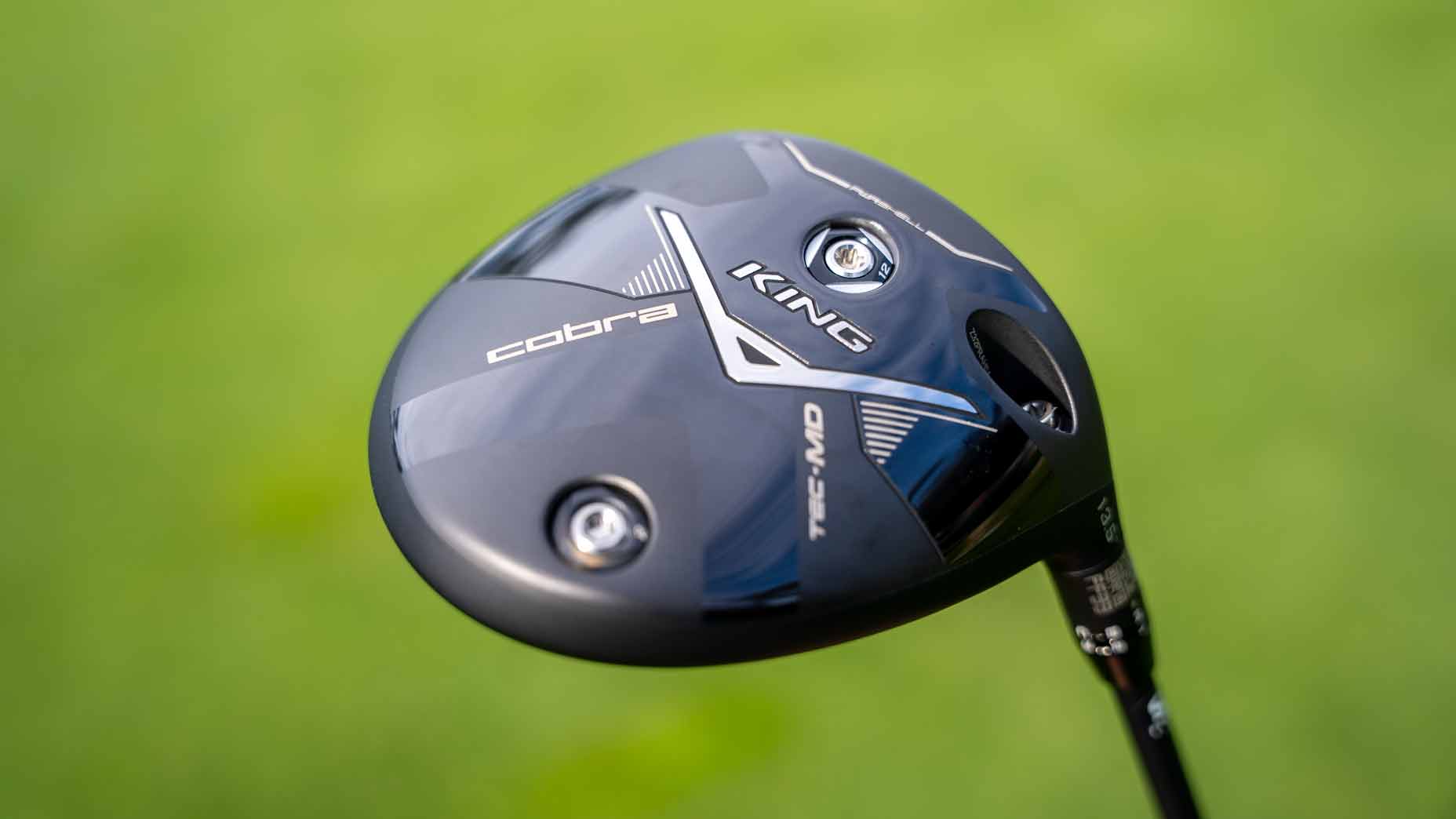
After months of Tour testing, Cobra’s King Tec-MD is finally coming to retail
“I could see kind of top line and kind of had better face awareness,” he said.
After the Playoffs, Fowler started to play more with the Mini to get the same level of familiarity he had with his gamer. The newbie has been in the bag for all three events he’s played this season.
Several of Cobra’s other staff players, like Gary Woodland and Lexi Thompson, put the mini in play as early as last year, but Fowler was the main target for Schomin and the team.
“Obviously, it would have been better to have it in there a little sooner. You know, like six months sooner,” Schomin joked. “That’s definitely one of the most gratifying things where you’re working on a project and you have specific goals and targets in mind and things you want it to do. And it was very good right from the start. So it was great that you put the time and effort on the front end, into planning on getting something very good in the back, and I felt that we really did.”

Cobra KING TEC Custom Mini Driver
5-wood*

Specs
Cobra King Tec Rail Proto
Loft: 18˚ @ 17.7˚
FF33 Setting: B3
Shaft: LinQ PowerCore Blue 8-TX
Length: 40.25″
Tipping: 1″
Swingweight: D2
*The 5-wood was not in the bag at the time I caught Rickie’s clubs.
Fowler’s 5-wood is a club gearheads clamor for Cobra to release. He uses a Tour-only prototype King Tec Rail 5-wood that, as the name implies, features a set of rails along the bottom to help the club glide through the turf.
Those rails are somewhat of a symbol for the brand made famous by the original Cobra Baffler from the 70s.
This new King Tec model replaces an LTDx LS 5-wood from 2022, which was the last time Cobra had a railed option for a fairway wood. Perhaps the new addition is a signal that one is coming down the pike.
Fowler keeps his 5-wood short, more typical of a 3-hybrid length, to make the club more versatile and easier to get out of the rough. A shorter shaft makes for a steeper attack angle, making it easier to hoist the ball out of thick rough.
Irons
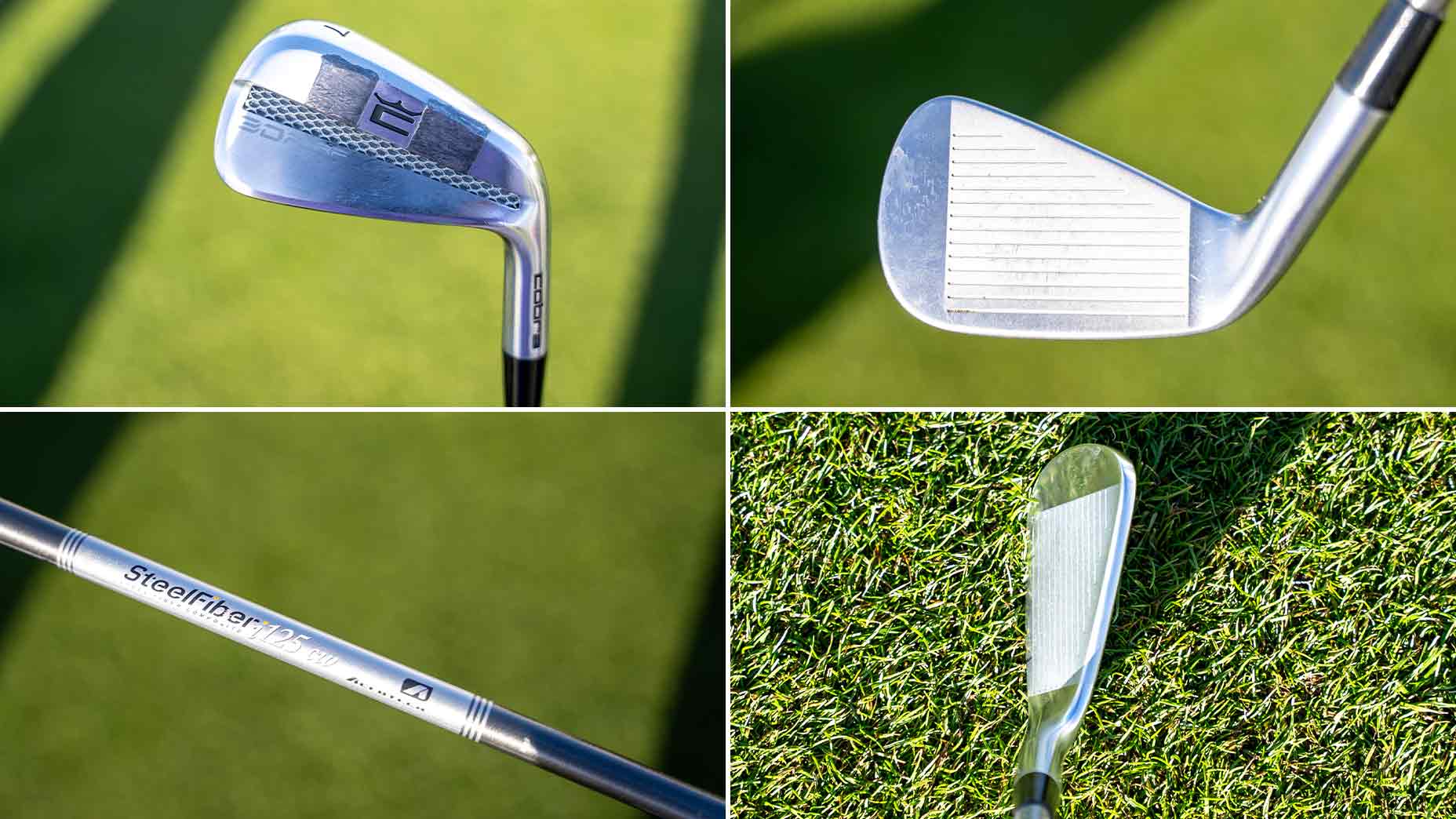
Specs
Cobra 3DP RF 4-PW
Shafts: AeroTech SteelFiber 125cw Stiff
Lofts: 23/27/31/35/39/43/48
Lies: 62/62.5/63/63/63/63/63.5
Length: -.75″ (36.5″ 7-iron)
Swingweight: D2
It wasn’t long ago that Fowler was playing some of the meanest-looking muscle backs on the PGA Tour in his RF Proto Rev33 blades.
The name of the irons came from the 33 revisions Cobra designers made to the irons to meet Fowler’s specifications, and they were also made famous by being even too knifey for Rory McIlroy.
Those irons made it just over two years in his bag before he switched to a more traditional muscle-back profile. In recent years, however, Fowler has eschewed blades, even favoring Cobra’s King Tour Player Performance line.
“I always liked a certain look,” Fowler said. “But then once I kind of opened my eyes a little bit to — not necessarily game improvement but things that were more forgiving, and I was able to get the same numbers, but sweet spot got bigger, mishits were a lot closer to stock numbers. There was no reason to make the game any harder.”
Schomin called it really bad timing because around the same time the RF Protos were ready to go, Fowler started struggling with his swing. With almost no offset in the iron, Schomin said it was difficult to hit Fowler’s flight windows.
Fowler moved into the King Tour forged cavity-backs in 2022, which are larger than the more traditional King CB irons. They also have more offset, radically different from the RF Protos. That was a big discovery for Fowler.
“I learned over time in the process with those that I actually liked offset or some,” he said.
So while it was a bummer not to play the blades that were designed for him, Fowler said it was a bit of an ego check because the performance wasn’t there.
Now with Cobra’s 3D-printing capabilities, the company has the ability to make an iron that looks like the RF Protos but performs more like the King Tours. Still, Fowler wanted to stay in the larger shape.
His new 3DP RF irons have the same shape as the King Tour, which is actually slightly larger than the retail version of the 3DP Tour. But the internal lattice structure and tungsten weighting allow them to be even more forgiving.
Where his mishits were coming up 7-8 yards short before, Fowler says now it’s only 3-4 yards. That might not seem like much, but that could mean the difference between a 9-foot putt (PGA Tour make percentage of almost 47%) versus a 24-foot putt (just 12-13%).
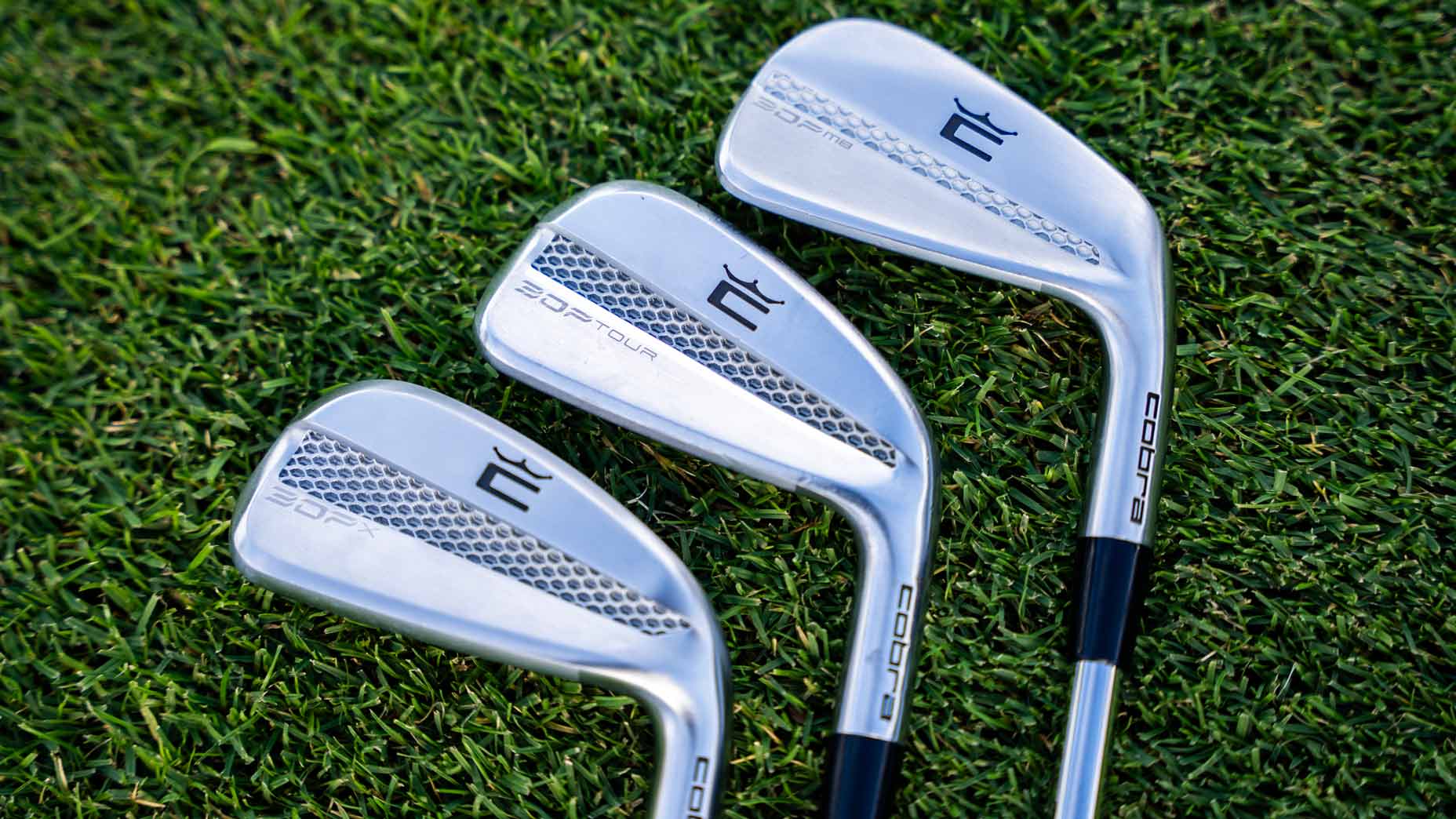
Cobra expands 3D-printed iron lineup with new 3DP MB, X shapes
“Those flow right in the bag just because they’re essentially the same sole shape, same top line, same offset, mass properties,” Schomin said of Fowler’s new 3DPs. “So it was a super easy transition for him.”
Fowler also kept the same AeroTech SteelFiber 125cw Stiff shafts he started playing last year at the Travelers Championship.
Fowler has bounced between different True Temper and KBS shafts and was playing KBS Tour C-Taper 125 S+ shafts until then, but he was dealing with shoulder issues and wanted to explore something that would be easier on his body. The SteelFiber shafts, a sort of best of both graphite and steel option at the same weight he was playing, ended up being the winner.
Launch and spin didn’t change and dispersion stayed tight. He experimented with lighter options this offseason, but the 125cw Stiffs remained the best.

Cobra 3DP Tour Custom Irons
Wedges


Specs
Cobra SnakeBite (54V @ 52), Cobra King RAW (58D @ 56), Cleveland RTZ Tour Rack Proto (60 Low)
Shafts: True Temper Dynamic Gold Tour Issue S400
Lie: 64˚
Length: 35″, 34.75″, 34.5″
Swingweight: D2
Remember when Fowler said he learned that he actually liked to look at offset? That’s evidenced by his unique set of wedges.
He actually has three different models of wedges and both of the Cobra models, a SnakeBite 54V and a King RAW 58D, are both bent two degrees strong to add that offset.
His lob wedge is also a custom Cleveland RTZ Tour Rack Proto with — you guessed it — additional offset to suit his eye.

Cobra KING Custom Wedge
Putter

Putter: Scotty Cameron GoLo Center shaft prototype
Loft: 4˚
Lie: 70˚
Length: 35″
Grip: Scotty Cameron cord
Putter has always been a revolving door for Fowler, but that doesn’t mean he hasn’t had spurts of greatness with the flatstick. He led the PGA Tour in putting in 2016-17, but he also dropped as low as 161st in 2021-22.
He improved to 48th in SG: Putting the following season when he jumpstarted the Osyssey Jailbird craze by switching to a 38-inch counterbalanced Jailbird with a huge slab of lead tape on the sole. That putter led to players like Wyndham Clark and Keegan Bradley asking for the “Rickie Fowler build” and all of a sudden, the once forgotten about Jailbird was Odyssey’s hottest putter. All three players used the putter for marquee wins in 2023.
Fowler went searching again midway through 2024 and ended up using L.A.B. Golf’s DF3 by the end of the season and then the larger DF2.1 by last season.
But to start 2026, Fowler shocked everyone by returning to a more traditional center-shafted putter, a Scotty Cameron GoLo prototype he’s had since 2012.
He said the heavy jailbird build and the low-torque L.A.B. putters “served a purpose” because his putting stroke was not in a good place.
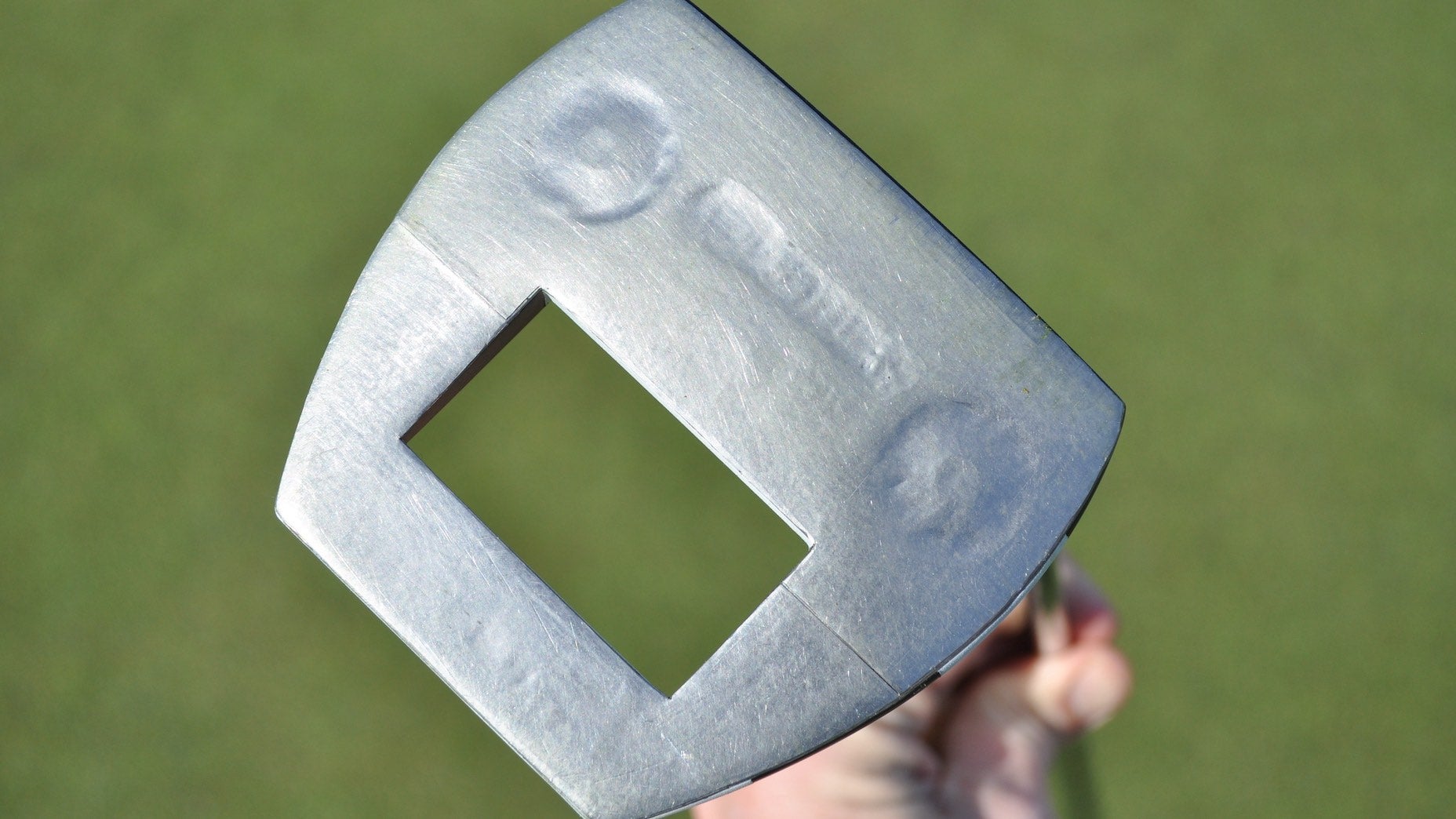
This was the biggest golf equipment story of 2023
“Going to the jailbird, kind of that longer length, a lot heavier, helped kind of quiet and take the hands out of it a bit,” he said. “And then from there went into messing with the L.A.B.s, still helping take the hands out of it a bit, but at a lighter, kind of shorter setup to help try and bring some feel back into it.”
Now Fowler said he feels like the mission is accomplished and he could putt with any of the dozens of putters he has at home. But it was over the offseason when he was constantly rolling a Bullseye putter. The old-school blade used by the likes of Nicklaus, Palmer, Player and more at times in their legendary careers wasn’t something Fowler was considering playing, but he loved the look of the straight-in shaft.
“Just felt like I was just hitting it, starting it online and being able to kind of load and release the putter,” he said. ”And I feel like just thinking back, like whenever you go play like Putt-Putt or something, you just grab a random straight-in shaft, like you rarely started offline just because you have that straight connection through the right hand.
“So I remembered I had this GoLo head at the house, had to search for a little bit, but found it, and started to mess with it a bit.”
He explained that the L.A.B. helped him get his hands in a good spot and it worked nicely to go back into a straight-in center-shaft putter because the putter arcs and travels the same way. The feel is just different.
Through the first three events of his season, Fowler is 31st in SG: Putting with the 14-year-old wand, picking up more than .6 strokes a round on the greens.
But for a serial putter-switcher like Fowler, this is unlikely the end of the road, either.
“I’m open to anything. Whatever works,” he said. “If a putter looks good and you’re starting it online and being able to have that mental belief with it, It doesn’t matter what it looks like. So no, nothing’s out of it.”
Extras
Grips: Golf Pride Z-Grip Align Max

This article originated on Golf.com













Leave a comment