








A ‘Top 63 Value for Money’ article gets Kevin Markham thinking. Exactly what is ‘value for money’ and where can you find it?
Up to what price is a green fee ‘good value’? Is it €50, €100, €300?
It comes down to your personal interpretation, but the issue of ‘value’ always gets tangled up with ‘cheap’. Just because a green fee is €195 doesn’t mean it’s not good value. I would argue that Carne’s peak rate of €195 fulfils the promise of good value because it is an experience like no other. If you are looking for excellent value AND cheap then the courses at Birr, Rathcore, Macreddin, Portarlington, Naas, West Waterford, Esker Hills, and Fermoy are but a handful that spring to mind. They’re under €50 so please go play them while you can.
This article has been inspired by a website that listed its ‘Top 63 Value for Money’ courses in the world. I was fascinated, and then I saw that the course ranked third on the list is a Scottish links that introduced a £1,000 green fee this summer. Did you just fall off your chair? I know I did. How could such a course ever be considered great value? But here’s the thing: there are ways to get around that headline green fee. Okay, so maybe you have to play off mats at midnight on a Tuesday in December, but at least there is a way. The Scottish course in question offers a £120 fee during the winter months when you never have the rush of American bucket list-seeking golfers. It plays into the hands of those closer to home who have no fear of winter golf.
Ireland has six entries on the list: St Patrick’s Links (23); Royal County Down (26); Lahinch (28); Ballybunion (29); Royal Portrush (32); and Portmarnock (45).
If you only looked at the peak rates, you’d just assume that such courses are beyond reach, but not necessarily. Take Royal Portrush: its peak green fee next year is £420, but if you enter The Great North Links Challenge 2026, you will play Ballyliffin (Glashedy), Portstewart (Strand) AND Royal Portrush (Dunluce) for €400.
At the other end of the value scale – so far away, it’s almost out of sight – is an event due to take place in 2026. The Intercontinental Golf Tournament takes things to extremes and gives a full two fingers to the climate crisis facing the planet. Golfers get to fly by private jet to seven continents in seven days to play seven courses. The price? €79,000. Maybe you get air miles, maybe you don’t.
At about the same time as the Top 63 list was published, news came that another Scottish course/resort had released its 2026 fees. If you thought £1,000 was over-the-top, and €79,000 required a second mortgage, try visiting Ardfin, on the island of Jura. This exclusive resort has put together a package that will cost you £60,000 per night with unlimited golf. Only there’s a catch: you have to stay a minimum of two nights. So that’s £120,000.
I hope you bolted that chair to the floor!
Incidentally, Ardfin came in at number 63 on the ‘Top 63 Value for Money’ courses, which emphasises how preposterous lists like this are.
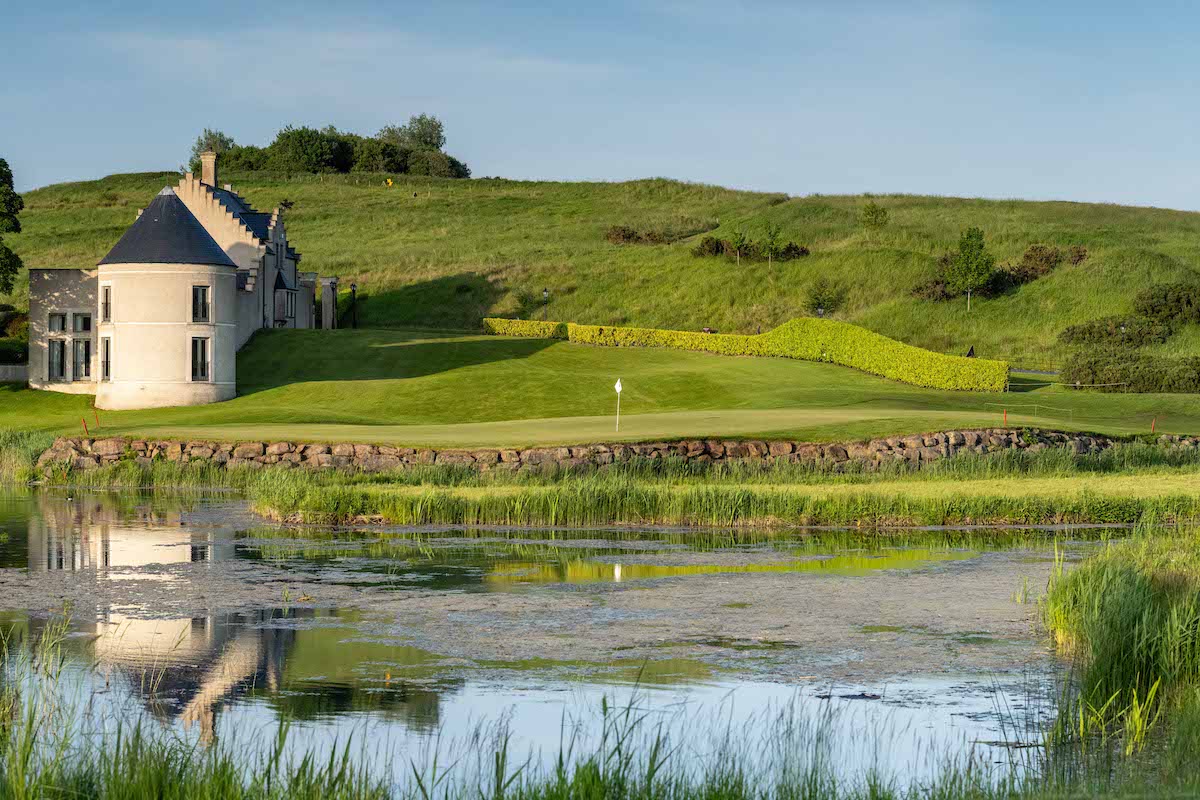
Let’s make some comparisons. For a Golf Ireland rate of £80-£95 you can play Lough Erne. Course condition is excellent (based on an August visit), it is a thrilling challenge and it’s a glorious lakeland setting with water in play on 11 holes. Everything about it is big and beautiful. It is not ‘cheap’ golf… but £80-£95 must be considered exceptional value when you’re playing one of our very best parklands. If you want cheap golf, pop 20km down the road and play Blacklion, all day, for €25. This nine-hole course bounds over heaving terrain, tumbling down to a lake. You won’t get the finesse of Lough Erne – Blacklion is maintained by volunteers – but for sheer entertainment and a dash of the different, you’ll be smiling all day long.
And since all of the earlier discussion focused on links courses and winter golf, here’s a quick shout-out to Jameson Links, which you can play for €150 this winter, with no mats, or Corballis at €25.
Value – like beauty – is in the eye of the beholder so get out there and start looking.















Leave a comment