





Luke Donald would’ve ripped your hand off for a 5.5 – 2.5 lead after the opening day if you’d offered it to him at any stage of the past two years.
He’d probably even have taken it halfway through the afternoon fourball matches, but with the final action of the day – a Rory McIlroy putt from 13-and-a-half feet that grazed the hole but missed – it could’ve been 6 – 2.
And 6 – 2 wouldn’t have been an unfair reflection, because, overall, the Europeans played great golf and the Americans… well, the Americans didn’t.
But lets dig a little deeper. What went right for the boys in blue and what went wrong for the boys in red?
And let’s start right at the top with match number one.
The early foursomes matches
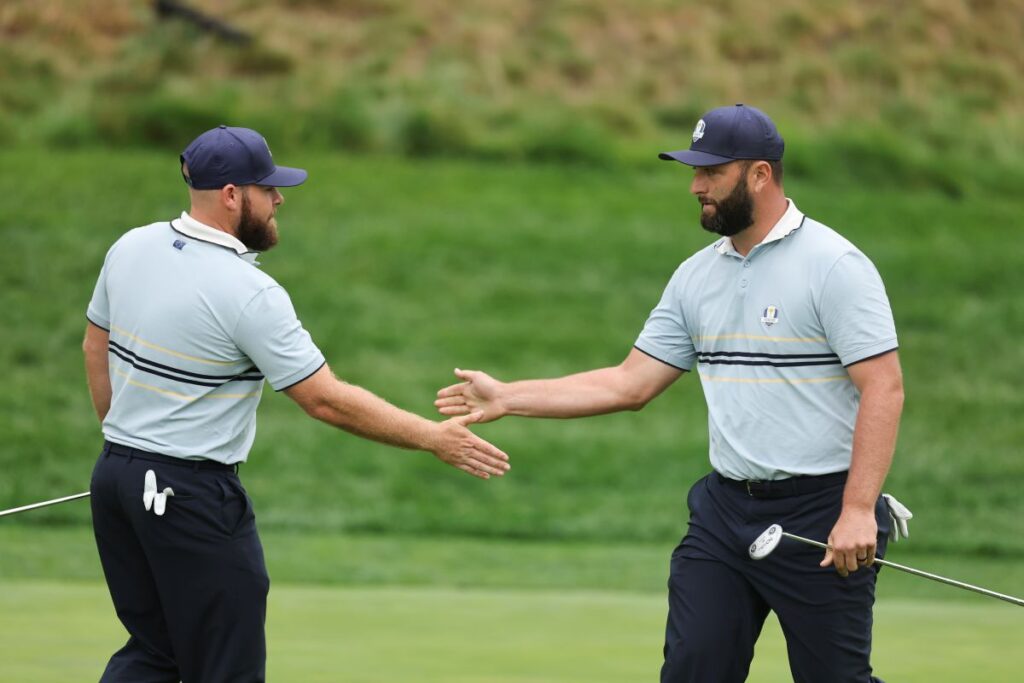
Bryson DeChambeau and Justin Thomas versus Jon Rahm and Tyrrell Hatton. It’s safe to say that the high-water mark (so far) for the U.S. team came within the first 10 minutes of the Ryder Cup. Whether it was Bryson launching a 344-yard drive into the bottleneck fairway just short of the green or Bryson rolling in a 15-footer to draw first blood is up for debate, but there was a reason why he was sent out first and we saw it immediately.
Rahm and Hatton weren’t brilliant over the first seven holes, but they had moments of brilliance. Most notably on the sixth where Rahm played what was undoubtedly the shot of the day from a horrendous lie in long grass well left of the fairway. It didn’t win them the hole, but it saved them from going 2-DOWN.
Bryson and Thomas weren’t brilliant over the first seven holes either, but they were definitely better and probably should’ve been further ahead. But such is matchplay golf, and when the European duo started getting sharper, they took their chances and turned the match on its head. The gamble with sending Bryson – the man most likely to pump up the crowd – out first was that a lot rested on his broad shoulders.
There’s no shame in losing to Rahm and Hatton – Donald didn’t send them out first for no reason either – but the energy was sucked out of the crowd, and it didn’t help that Scottie Scheffler was getting pummeled in the match directly behind either.
And let’s talk about that.
Playing with the world number one
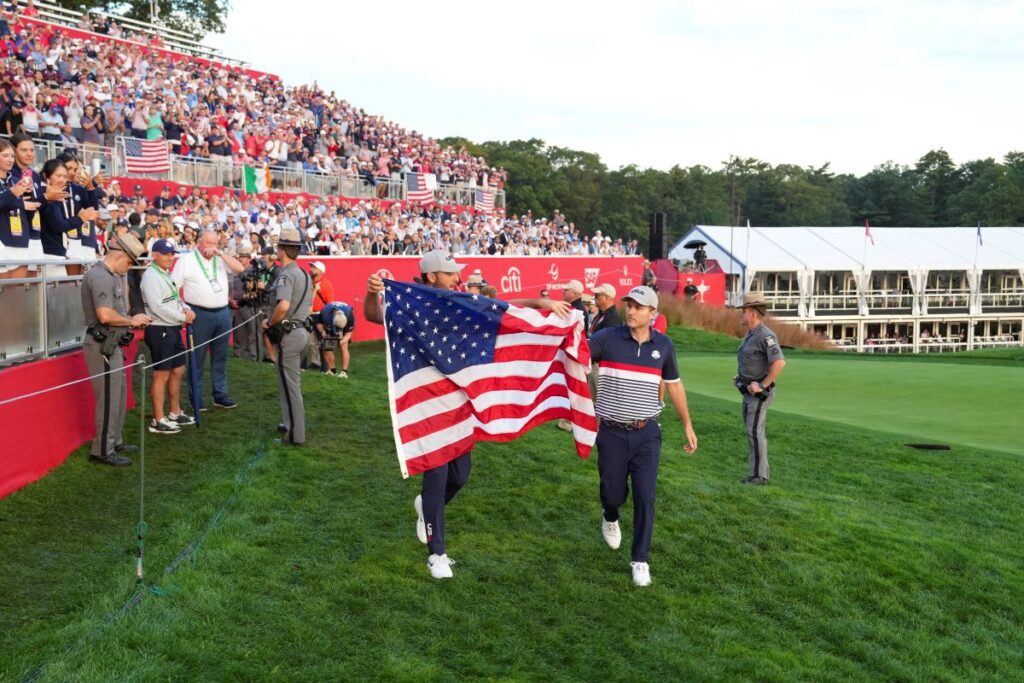
It’s not easy playing with the game’s alpha dog. We’ve seen that countless times with Tiger Woods in the Ryder Cup. Henley and Scheffler paired up well in foursomes at the 2024 Presidents Cup, but for all the similarities between the two events, when you break it down, they’re really chalk and cheese.
As the shortest hitter on either side, Henley’s accuracy was supposed to give Scheffler – the premier long iron player in the game – the platform to excel. Put Matt Fitzpatrick and Scheffler side-by-side and there’s only one winner in an extended closest to the pin contest, but when one has a 7-iron and the other has a wedge, it’s a different story.
It also didn’t help that the Americans kept missing crucial putts while the Europeans holed enough to keep building on the advantage their tee-to-green superiority (on the day) was providing.
But both of these American partnerships were ones we expected – just not who had the tee on the odd holes in the Scheffler/Henley pairing – so it’s hard to Monday morning quarterback Bradley here.
Match number three, however, was a different story.
The surprising Morikawa/English pairing
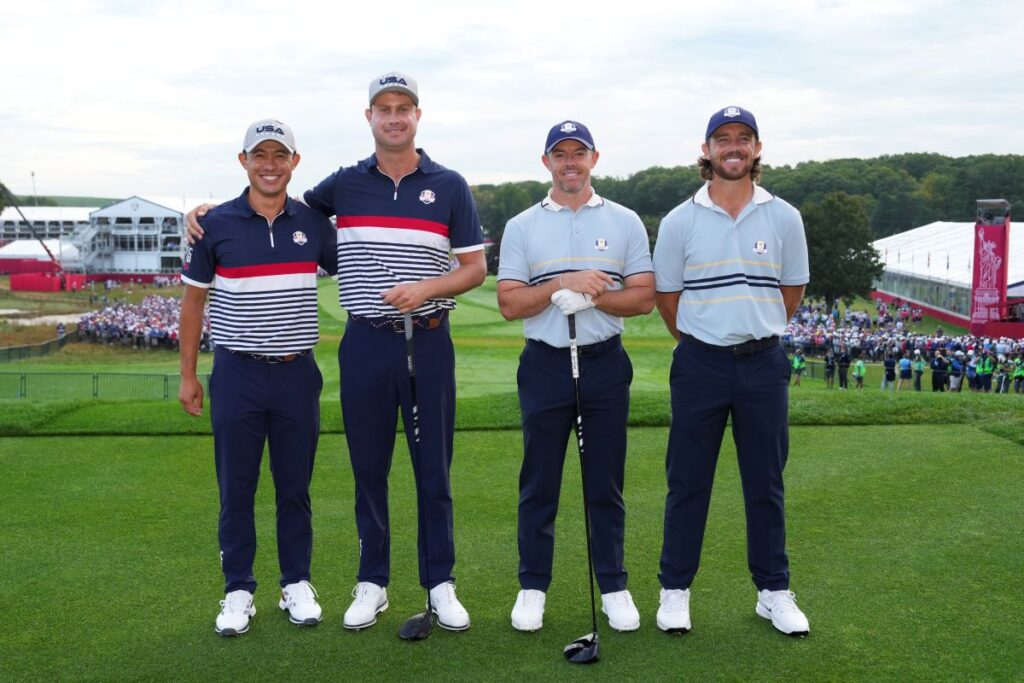
Nobody was predicting a Harris English/Collin Morikawa foursomes pairing. It wasn’t even on anybody else’s radar, and with good reason. Data Golf announced that of the 132 possible foursomes pairings within the U.S. ranks, this partnership ranked 132nd in terms of statistical fit. We can read too much into stats, but even still, this was an odd one.
And Rory McIlroy and Tommy Fleetwood were superb. When a player makes just about every 50-50 putt he faces, as Rory did over the first half of the match, you’re probably going to find yourself behind and the lead the Europeans built early meant this was an early victory procession.
Bradley claims he had his reasons – reasons he wasn’t going to go into – to team them up, but after it backfiring so spectacularly, it’s an even bigger shock that they’re going back out again on Saturday morning and, as luck would have it, running into McIlroy and Fleetwood again.
Maybe they win this time and go some way to justifying the pairing, but if they don’t, then it’ll go down as one of the most glaring errors from a Ryder Cup captain.
When the Europeans closed out this match, they created history by becoming the first European side to claim each of the first three matches on away soil. From a scoreboard perspective, it literally couldn’t have gone worse for the Americans.
The “they just made more putts” defence
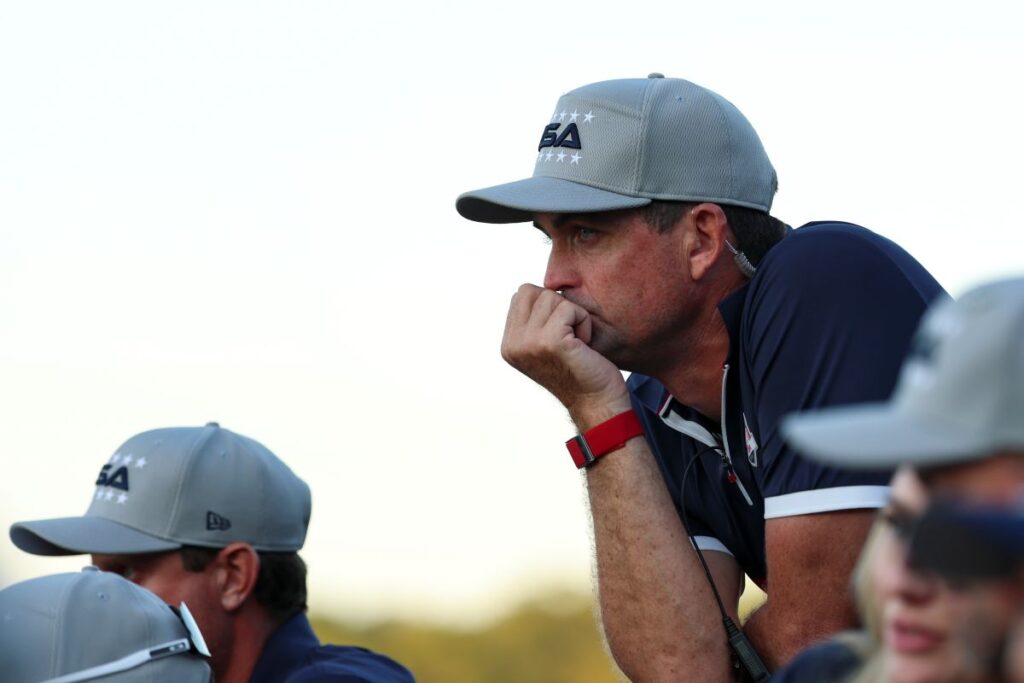
Later, after the fourball matches had concluded and Europe came away with a 2.5 – 1.5 advantage from those, Bradley would claim that putts generally going in for one side and not for the other was the difference and it’s hard to argue. Rahm and Sepp Straka made crucial ones while Scheffler seemed to hole nothing until it was too late.
Fleetwood and Justin Rose holed big putts when needed and squeezed over the line against Bryson and Ben Griffin. Cameron Young and, to a lesser extent, Justin Thomas were ruthless against Ludvig Åberg and Rasmus Højgaard who made it easy for them, and the final match saw both teams hole and miss crucial putts in seemingly equal proportion, resulting in a tie.
So, when you look at it that way, Bradley has a point.
The crowd factor
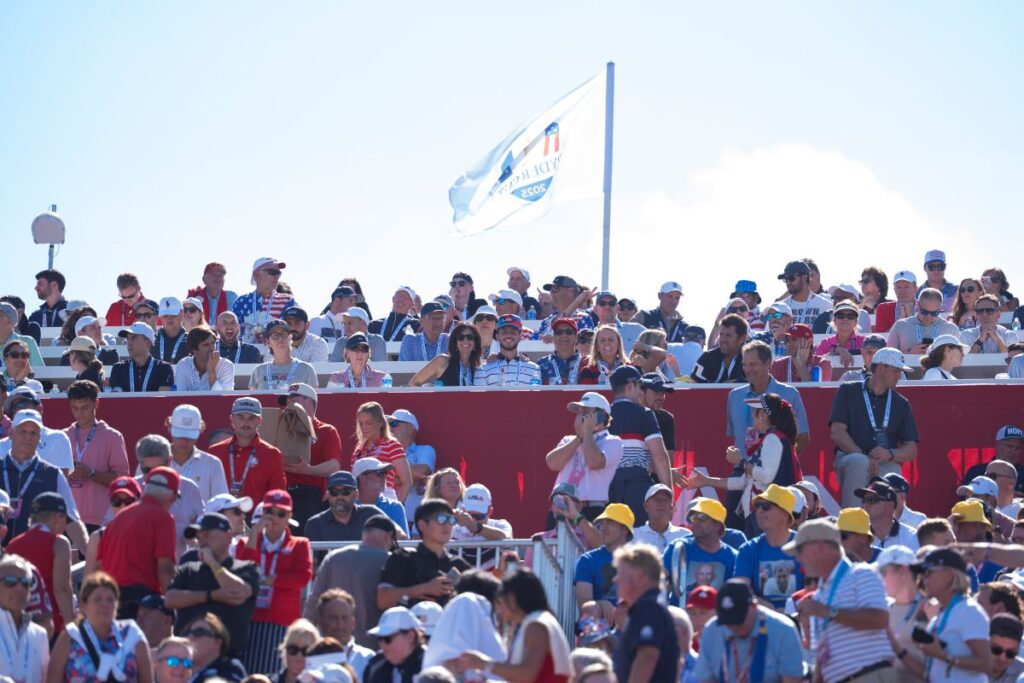
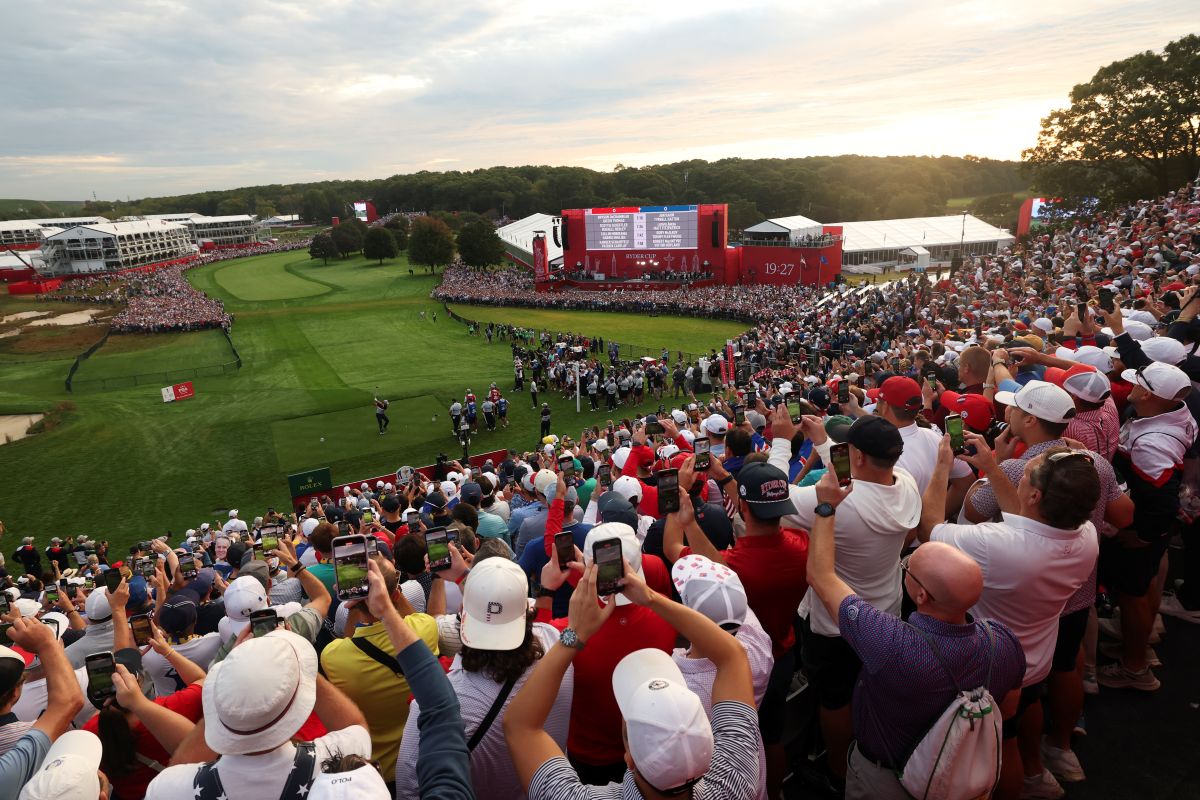
The crowd, the heckling, the jeers and cheers, all of this was well signposted in advance. As was the fact that a fast European start could turn things on its head.
When you’ve prepared to be heckled, when you start each backswing with the expectation that somebody is going to shout something, it’s a lot easier to manage than when it comes out of the blue. When you know that you’re going to get personal insults thrown at you, it makes them a lot easier to stomach, and when you know that you’re taking it all in your stride and winning, it makes it even easier still.
The true test of European mettle will come when the Americans are on top. There are another eight matches on Saturday and 12 more on Sunday. It’s not inconceivable that the lead the Europeans have built over the first day could wither and be gone by the time the Saturday afternoon ties head to the first tee.
Even if the lead is shortened, that will breathe life into the crowd, will embolden them, and will lead them to believe that their efforts are working.
It may not have been anywhere near as explosive as feared, but only eight of the 28 points have been won and lost.
There is a long way to go yet










Leave a comment