
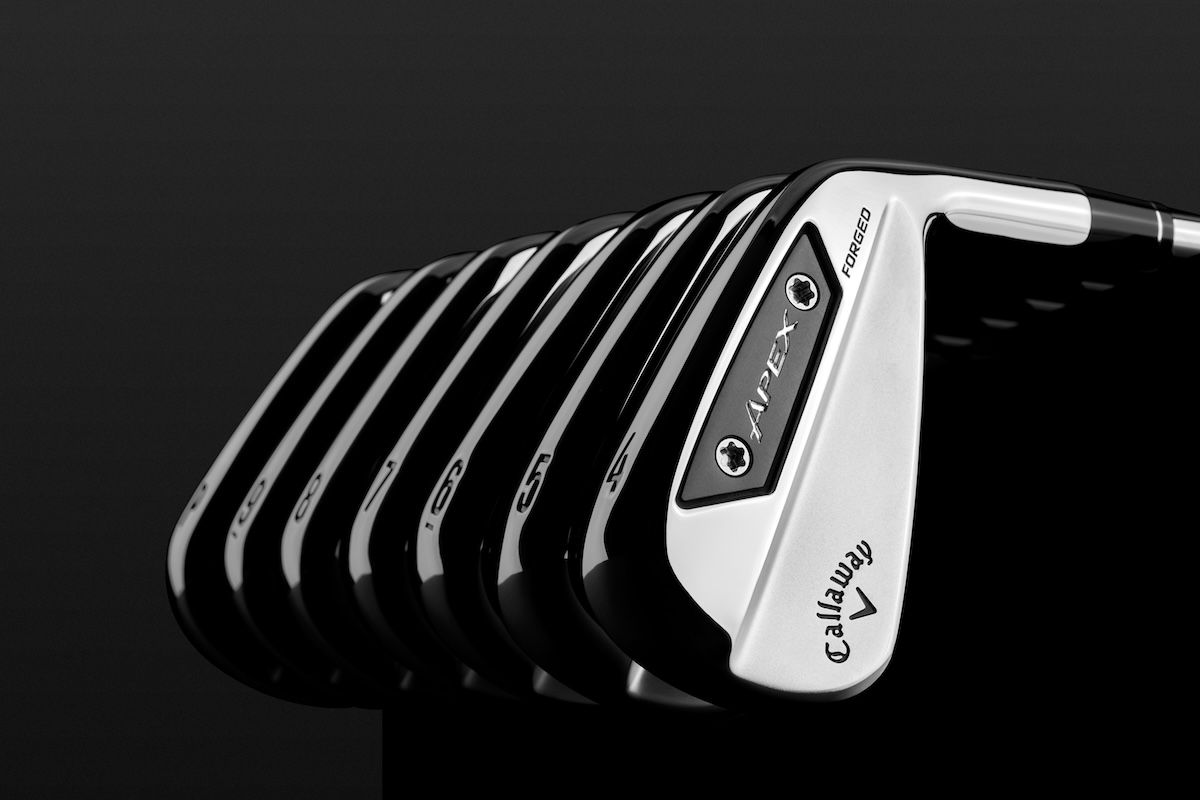









Callaway has produced some of my favourite irons over the past couple of years with its Apex lineup. As a six-handicap golfer, the tour-inspired Apex TCB was always aspirational for me; it felt great when I hit it, but was a bit too much club for me. So, when I heard about a new player’s distance offering that sat between the TCB and the Apex Ai200, it had my attention straight away.
The new Apex Ai150 is a direct replacement for Callaway’s Apex Pro players’ distance iron, adding to a Callaway lineup that now includes 16 current line SKUs. However, the Ai150 actually manages to fill a gap in the market, and it’s a gap right up my alley.
The previous Apex Pro served the player who was looking for something more forgiving than the Apex TCB or X Forged model, but didn’t want to go all the way to the Ai200. Think of the Ai150 as the little brother to the Ai200 and Ai300. It’s going to be for your single-digit to mid-single-digit golfer who’s not necessarily looking for distance, but doesn’t want to give up distance, either. Until now, this player (me) would have to either play the Ai200, which was just a bit too hot and powerful, or my next option was to look at an X Forged, but with this head again, it was a bit asperational for me, and I saw a distance drop on off-centre hits.
Ai150 has a little bit of tech under the hood to maintain distance, but it’s really about precision and consistent gapping. When Callaway created the Apex Pro as their players’ distance iron, they would shrink their game improvement irons, in this case, the Ai200 by removing offset and thinning the topline. Realising that many elite players and pros were using Apex Pro as a long iron replacement in sets like Apex TCB, Callaway did it differently this time by starting with the TCB profile and making it larger.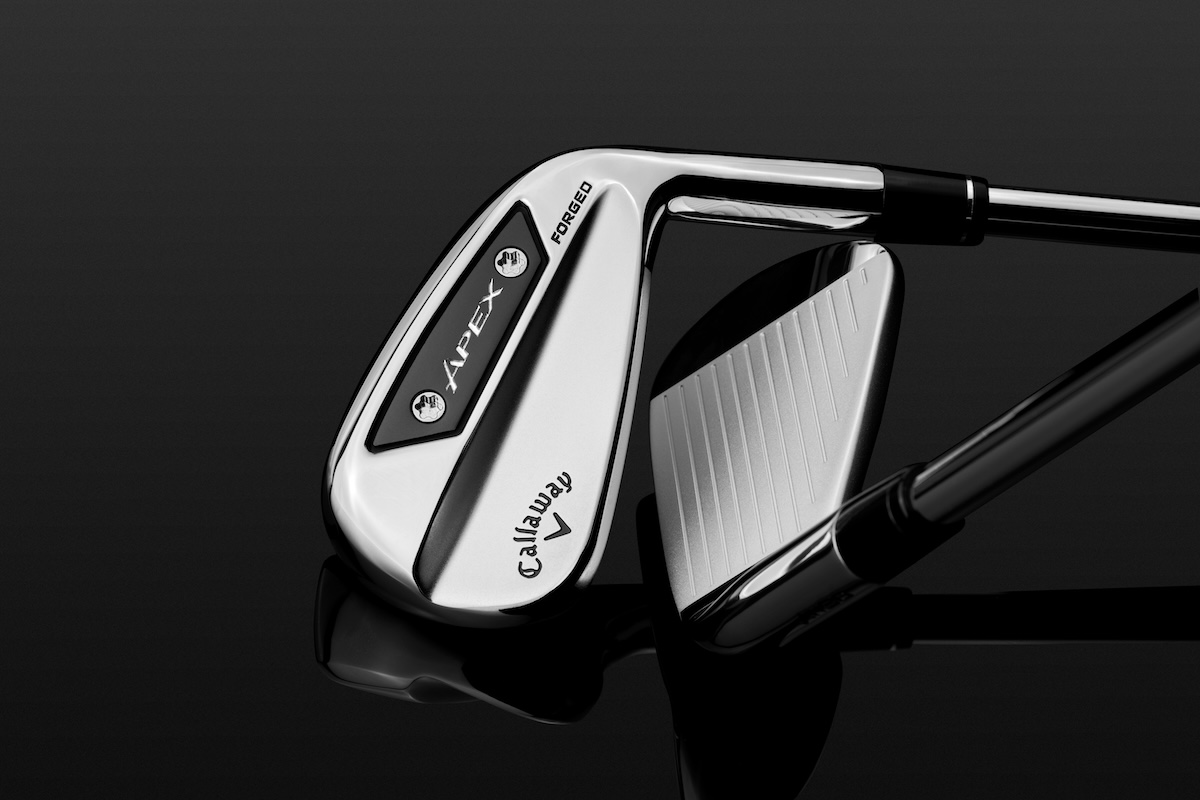
Ai150 features a tri-sole design with leading-edge relief to enhance turf interaction. This is a feature that helps players get in and out of the turf without digging. There’s an early onset bounce effect that allows players to get through the turf efficiently. The more I hit these, the more confident I became with that feeling, and it actually led to an increase in speed and distance.
Like it’s big brothers in the Ai200 and Ai300, the new Ai150 is made from the same 1025 forged hollow-body chassis with a 455 forged steel face cup in the 3- through 7-iron and 17-4 face in the 8i through wedge.
It also utilises Callaway’s Ai10x face technology present in its siblings and the Elyte driver family to create a variable thickness design and promote consistent ball speeds across the face. Not only will the Ai150 excel in full sets, but it’s also an easy set to blend with the rest of the Apex line, such as TCB or Ai200. These will be very useful for players as combo sets become more the norm than the exception these days.
As I mentioned earlier, this iron sits right in the sweet spot I fall into, and it’s gone straight into my bag. To give you an indication of where the Ai150 sits in the compact distance iron category, I would put it up against the TaylorMade P770 and the Srixon ZXi5. This iron is not about distance, it’s about consistency, workability and just the right amount of help under the hood.
Looking down on the head at address, they have a nice, clean, sleek appearance with a touch of offset, which suits my eye. My only gripe is the half-and-half combination of high-gloss chrome and matte finishes on the face. I would have prefered the finish on the Apex CB irons, which have a more brushed, matte finish.
Callaway Apex Ai150 irons are available for pre-order starting Thursday, July 10, and will be available at retail on Friday, July 25. They will come in at an RRP of €243 per club with a 4-PW set retailing for €1699. The sets will be offered stock with Lamkin Crossline grips and the True Temper Dynamic Gold Mid 115 g shaft. The 7-iron specs are 31˚ loft, 62˚ lie and 37″ length. The 7-iron loft of 31˚ is still a touch strong in traditional terms, but is between a degree and half a degree weaker than much of its competition in that iron category.













Leave a comment